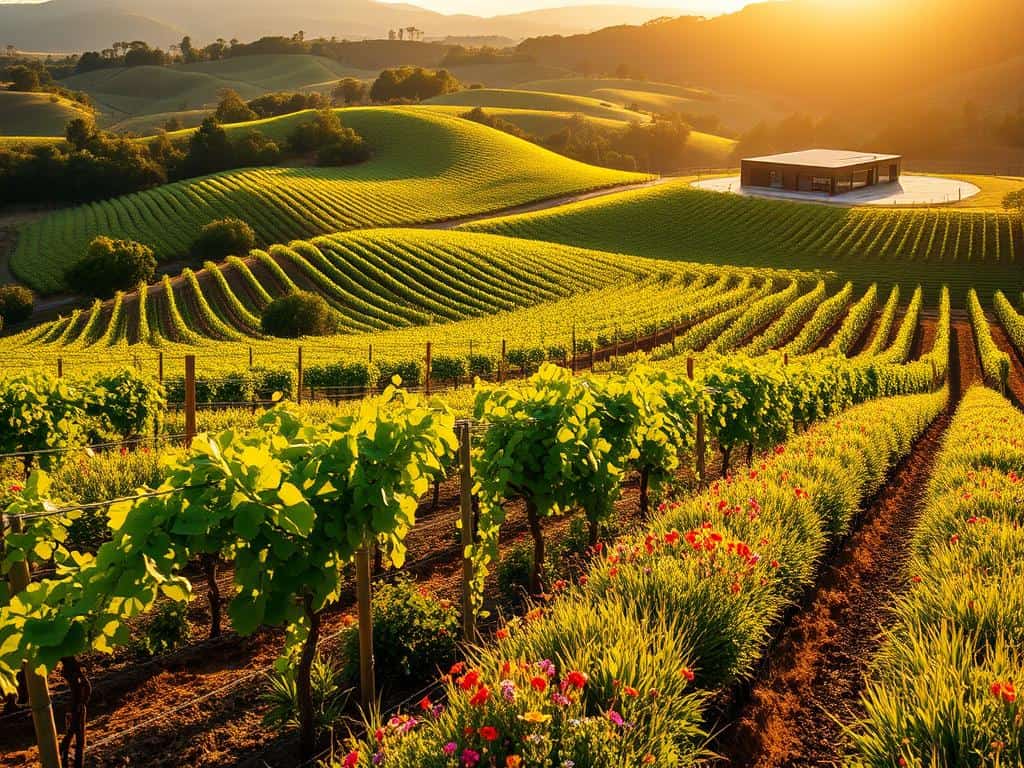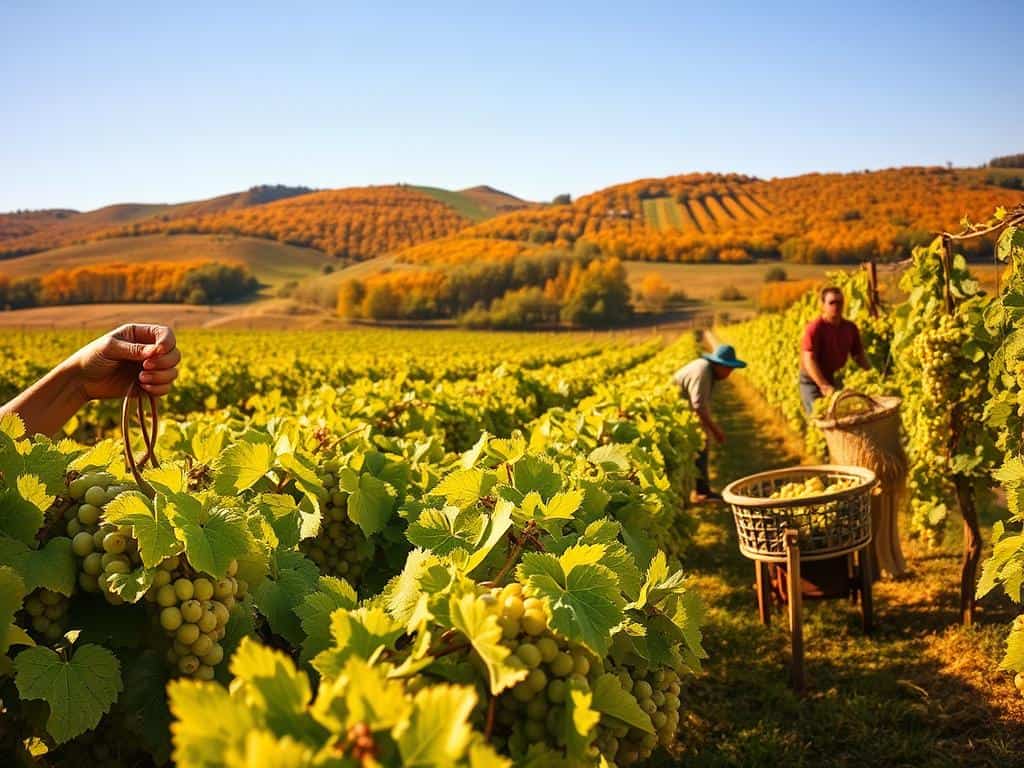
Did you know that grapes start to change color and soften at veraison? This important phase happens from late June to mid-August in the northern hemisphere. It marks the beginning of the ripening process.
After veraison, grapes ripen for 40-60 days. During this time, sugars go up and acids go down. This is when the wine’s flavors and tannins start to develop.
Looking at my vineyard, I know that sugar levels, acidity, and phenolic compounds are key. These factors help decide when to pick the grapes. The best time is usually late summer to early fall. But, the local climate, grape type, and vineyard conditions also matter.
Environmental factors like sunlight, water, and soil nutrients affect grape ripeness. They play a big role in the grapes’ quality.
For me, grape harvesting is a mix of science and feeling. I check the sugar content with a refractometer. I also taste and feel the grapes. Signs like brown and hard seeds show they’re ready.
Key Takeaways
- Veraison is the initial stage of grape ripening, typically occurring in summer.
- The ripening period lasts 40-60 days, leading to critical changes in sugar and acid levels.
- Timing for grape harvesting can vary due to climate and vineyard management.
- Environmental factors significantly impact grape ripeness.
- Signs of grape maturity include sugar levels and seed characteristics.
The Science of Grape Ripeness
Understanding grape ripeness is all about looking closely at vine growth stages and key signs of readiness for harvest. From flowering to maturity, there are important stages that affect grape quality and wine making.
Understanding the Growth Stages
First, grapes form and are green, lacking sweetness. Then, veraison happens, a key moment in grape ripeness marked by color changes. Red grapes turn from green to yellow and then red. White grapes become clear.
Things like sunlight, soil, and water affect these vine growth stages. Veraison usually happens between late June and mid-August.
After veraison, grapes ripen for about 40 to 60 days. They get sweeter and less acidic. The health of a vineyard can change a lot, so winemakers must watch each plot carefully.
Key Indicators of Readiness
Signs of grape ripeness include color changes, berry firmness, and flavor. Plump, smooth grapes are ready, while overripe ones shrivel. I look at sweetness and acidity balance for quality wines.
For reds, pH should be 3.3 to 3.5. Whites and rosés should be between 2.9 and 3.3. Total acidity levels should be 6.5 to 7.5 g/L for reds and 6.5 to 9 g/L for whites and rosés.
To check sugar content, I use refractometers to measure Brix levels. Sparkling wines are harvested at 18°-20° Brix. For regular wines, it’s 19°-25° Brix. This helps predict alcohol levels in the final wine.
By combining physical checks and chemical analysis, I know when to harvest. This deep understanding helps me make wines that show off each vintage’s unique qualities.
Grape Harvesting: Timing is Everything
Knowing when to pick grapes is key for making great wine. The best time to pick grapes is between 30 to 70 days after they start growing. During this period, the color of the grapes changes. For white grapes, they turn yellow, and for red grapes, they turn red-purple.
As I watch the grapes change color, I also check their sugar and acidity levels. Picking at the right time can make the wine’s smell and taste much better.
Optimal Harvest Timing for Quality Wine
In the northern hemisphere, grapes are usually ready to pick from August to November. In the southern hemisphere, it’s from March to August. As a winemaker, I know it’s important to pick grapes when they are ripe.
This ensures the wine has the right mix of sugars, acidity, and tannins. These elements are vital for making a fine wine.
The Role of Technology in Monitoring Ripeness
Today, we use advanced tools to check if grapes are ripe. I often use portable refractometers to measure sugar levels. Lab tests give more detailed information about acidity and pH levels.
This careful monitoring helps me know when to pick the grapes. Weather conditions can also affect my decision. Rain can make flavors weak and cause rot, so I might pick earlier. On the other hand, too much heat can make grapes too ripe, so I have to plan carefully.
Conclusion
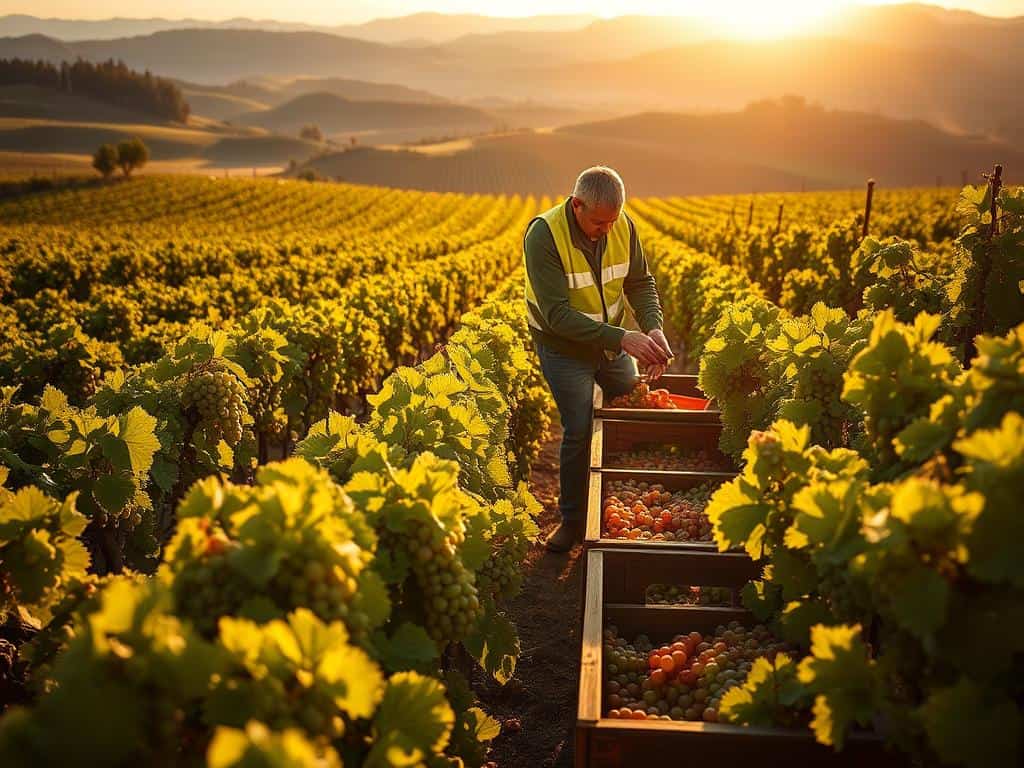
The grape harvesting process is a mix of science and skill that affects wine quality. I must watch the environment closely to find the best time to pick grapes. Picking grapes when it’s cooler than 30°C helps avoid damage.
After rain, it’s important to let grapes dry for a few hours. This step prevents water damage and keeps grapes healthy. Using the right tools and gentle handling is key to keeping grapes in top shape.
Once grapes are picked, getting them to the cellar quickly is essential. This helps keep their quality high and prevents spoilage. New technologies like the PhenoStation® help me pick only the best grapes. This teamwork has gotten a lot of praise from experts and the media.
By using these advanced methods, I can make wines with more flavor and health benefits. This shows the hard work and care that goes into making great wine.