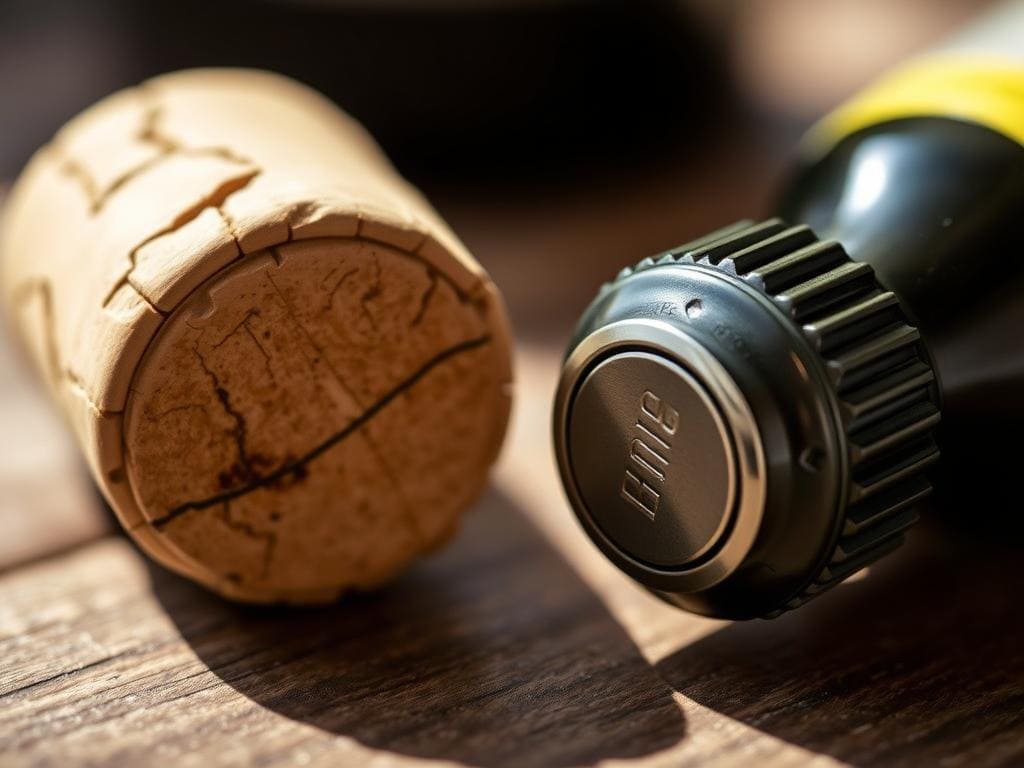
Did you know that about 36 billion bottles of wine are made every year? Most, 65-80%, use corks. This shows how corks have long been the top choice for wine. But, the debate between corks and screw caps is interesting. It mixes history, culture, and today’s tastes.
Corks let wine breathe and age well. But, screw caps have become popular. They solve problems like cork taint and supply issues. Both have their own benefits, making this topic exciting for wine lovers.
In this look at corks and screw caps, I’ll cover history, pros and cons. I want to help you choose the best closure for your wine.
Key Takeaways
- Cork is a renewable resource, harvested every nine years without harming the cork oak tree.
- Screw caps are preferred for wines meant to be consumed young due to their airtight seal.
- Cork taint can negatively affect wine quality, prompting a rise in screw cap usage in regions like Australia and New Zealand.
- Cork closures allow controlled oxidation, which helps certain wines age better.
- There is ongoing development of breathable screw caps to combine the benefits of both closures.
The Historical Context of Wine Closures
The history of wine closures is a tale of tradition and innovation. For centuries, the traditional cork was the top choice for winemaking. Now, modern screw caps offer a practical solution to industry challenges.
The Rise of Corks in Winemaking
Corks have been used in wine for over 300 years. They come from the bark of cork oak trees, harvested sustainably. This natural material seals bottles well, keeping flavors complex.
Cork has also been used for other things, like sealing olive oil bottles found in Roman shipwrecks.
The Advent of Screw Caps
As winemaking evolved, concerns about traditional cork grew. Issues like cork taint, caused by TCA contamination, became a problem. In the late 1960s, screw caps were introduced, first for economy wines.
The Australian screw-cap movement started in the 1980s. By 2000, screw caps were used in most premium Australian wines. Brands like Linganore Winecellars started using screw caps in 2021 to prevent cork taint and improve quality.

Wine Cork vs. Screw Cap: Advantages and Disadvantages
The debate between cork and screw cap closures in winemaking highlights both benefits and drawbacks. Each option has unique traits that affect the wine experience, mainly in aging and preservation.
Benefits of Using Corks
Corks have a long history in winemaking, dating back to the 1400s. They are a natural, biodegradable material. Corks allow a controlled amount of oxygen to enter the bottle. This is key for wine aging, improving the taste and smell over time.
Red wines, in particular, benefit from this slow change, leading to a more complex taste. The ritual of opening a corked bottle adds to the sensory experience. Yet, corks are expensive and can be tainted by TCA, affecting 1-3% of corks.
Benefits of Screw Caps
Screw caps, introduced in 1964, are known for their practicality and efficiency. They are more affordable and seal the bottle completely, reducing TCA taint risk. This makes them perfect for bottle preservation of young wines, like many whites and fruity reds.
Studies show that wines sealed with screw caps remain stable over time, unlike cork-sealed wines. Some advanced screw caps even mimic cork’s benefits while avoiding its drawbacks. Despite initial doubts, screw caps are now used in many premium wines.
Conclusion
The debate over wine closures has sparked a lot of talk. It’s not just about taste, but also about wine appreciation and winemaking technology. Corks let wines age, adding complexity, while screw caps keep wines fresh for drinking now.
Screw caps are used in 30% of global wine sales, showing they’re becoming more popular. They’re seen as a reliable choice for avoiding cork taint, which can ruin wine quality. Yet, some people prefer corks for their unique aging effects and eco-friendly nature.
Choosing a closure depends on personal taste and the wine type. Whether it’s the sound of a cork or the ease of a screw cap, each has its own benefits. This topic keeps the conversation lively, just like a great wine does at a gathering.