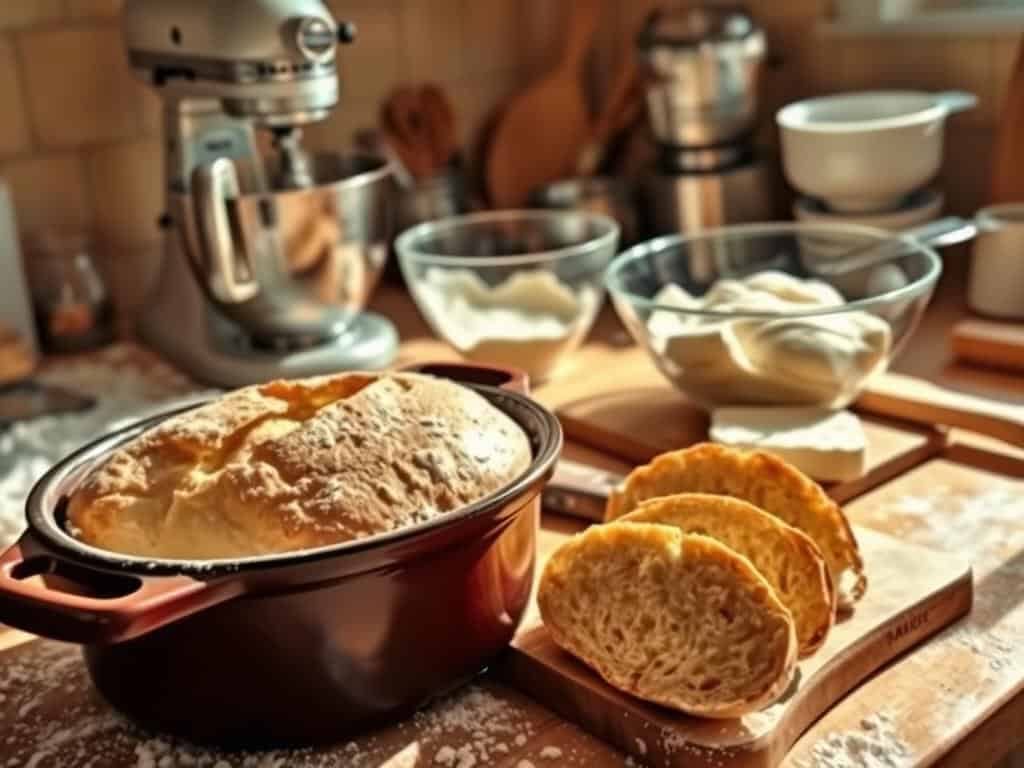
Did you know over 80% of Americans love homemade bread? Yet, only a few have tried baking it from scratch. Baking bread at home turns your kitchen into a cozy place filled with fresh bread smells. I’ll teach you how to make homemade bread as good as any bakery’s.
Whether you’re new to baking or have some experience, this guide will improve your skills. You’ll learn how to make the perfect bread.
Learning about yeast and mastering dough rising is exciting. I’ll break down each step to help you feel confident. You’ll soon be making amazing bread in your kitchen.
Key Takeaways
- Understand the role of yeast in bread making for fluffy results.
- Gather the essential ingredients to create a perfect bread recipe.
- Follow precise baking times for achieving a golden crust.
- Experiment with different techniques like adding steam for a crispy finish.
- Use tools like a digital thermometer for checking bread doneness.
Essential Ingredients for Baking Bread
To bake delicious bread from scratch, knowing the essential ingredients is key. Each part is vital, starting with yeast, the main leavening agent. Choosing the right yeast type is important for the final taste.
Understanding Yeast Types
I usually pick between active dry yeast and instant yeast for baking. Active dry yeast needs to be proofed in warm water, around 105-115 degrees Fahrenheit. Instant yeast can be added directly to the ingredients without proofing. Always use fresh yeast for the best results.
Important Baking Ingredients
Choosing the right flour is also important. I prefer bread flour, made from hard wheat, for its high protein content. This creates the perfect gluten structure for bread. All-purpose flour can also work, but it makes the bread smaller.
I add granulated sugar or honey to feed the yeast, ensuring it rises well. Salt enhances the flavor. Vegetable oil or melted butter adds moisture to the dough.
Measuring ingredients accurately is critical. For a typical loaf, I use 3 and 1/4 cups (430g) of bread flour, 2 teaspoons (6g) of instant yeast, 2 teaspoons (9g) of coarse salt, and 1 and 1/2 cups (360ml) of water. Adding herbs, cheeses, or spices can make the flavor better. Dusting the pan with cornmeal prevents sticking. Knowing these ingredients helps make great bread.
Steps for Baking Bread at Home
Baking bread at home requires several key steps. These steps are important for the bread’s taste and texture. Understanding each step, from proofing yeast to kneading, makes baking more enjoyable. Here’s a guide on how to do these steps well.
Proofing the Yeast
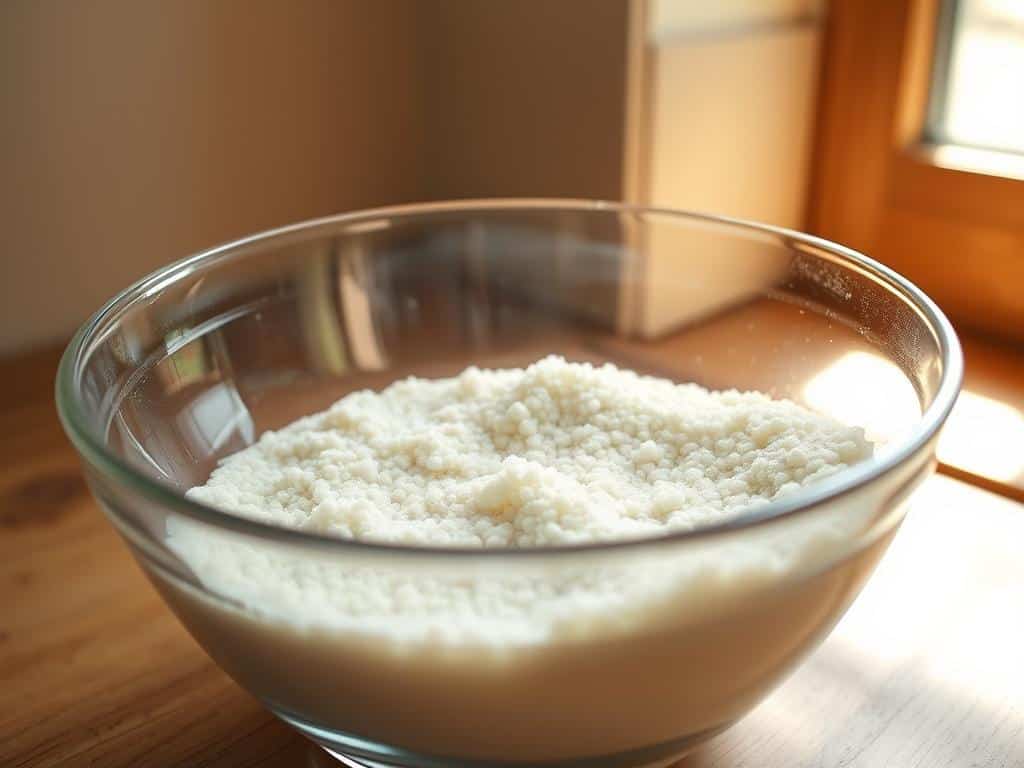
The first step is proofing the yeast. I mix one teaspoon of dry active yeast with 1¼ cups of warm water. The water should be around 105-110°F, and I add half a teaspoon of sugar. This temperature is key for yeast activation.
I let the mixture sit for about five minutes. When it becomes foamy, it means the yeast is ready.
Mixing and Kneading Dough
Next, I mix the proofed yeast with 2½ cups of high-protein flour and 1½ teaspoons of kosher salt. I often use a stand mixer with a dough hook for ease. But, mixing by hand works too.
When kneading, I either do it by hand for 10-15 minutes or use the mixer. It’s important to knead until the dough is smooth and slightly sticky. This dough should pass the windowpane test, showing it has enough gluten.
Rising Dough
After kneading, I put the dough in a greased bowl. I cover it with a cloth and let it rise in a warm place. It usually takes about 90 minutes for it to double in size.
This rising phase is where fermentation happens. It’s amazing how it develops the bread’s flavors. For even better bread, let it rise again in the loaf pans for 60-90 minutes.
Baking Techniques and Tips for Perfect Bread
Getting perfect bread starts with the right techniques and tips. Knowing the best baking temperatures and methods is key. Using a bread thermometer helps ensure your bread is cooked just right.
Temperature and Baking Times
Finding the perfect temperature and time is essential. Most breads do well at 350°F. But some artisan loaves need a higher heat, like 475°F. A bread thermometer helps me check if my bread is about 195°F inside. This ensures it’s cooked but stays moist and flavorful.
Using a Dutch Oven or Baking Stone
Baking in a Dutch oven makes the bread’s crust crisper by trapping steam. A baking stone also helps by spreading heat evenly. These tools can greatly improve your bread’s quality.
Essential Baking Tips
Some key tips can make your bread better. Don’t open the oven door too often to keep the heat in. Adding steam early in baking can make the crust better. Using a scale for measuring ingredients helps with accuracy. With patience, practice, and the right techniques, you’ll get the best bread.
Conclusion
Now, I’m ready to bake homemade bread thanks to this guide. I’ve discovered that just four ingredients—flour, water, salt, and yeast—are all you need. These ingredients can make countless delicious loaves.
Learning to make bread has been very rewarding. It lets me connect with my food and share something special with loved ones. Sharing a warm, homemade loaf is a thoughtful and impressive act.
As I keep baking, I remember a few key tips. Using a digital scale for exact measurements helps get consistent results. Proper resting and folding techniques make the bread airy. Slow fermentation also boosts the flavor.
Every loaf I bake is a chance to get better and enjoy fresh bread from my oven. It’s a simple pleasure that brings joy.