Did you know that about one-third of all food globally is wasted each year? This fact shows we need better kitchen habits, like using leftovers. By getting creative with leftovers, we can help reduce waste and save money.
Leftovers are often overlooked, but with creativity, they can become amazing meals. For example, leftover chicken can turn into tasty chicken soup or zesty tacos. The CHEF iQ Smart Cooker helps by controlling temperatures precisely. This lets me try new things with last night’s dinner.
Stale bread doesn’t have to be thrown away. It can become crunchy croutons or a yummy bread pudding. Starting a “leftover night” can change how we see uneaten food. It encourages us to think outside the box and save resources. Let’s explore some creative ways to reuse leftovers, making our meals both tasty and eco-friendly.
Key Takeaways
- Approximately one-third of food produced globally is wasted.
- Repurpose proteins like chicken into soups and tacos.
- Transform stale bread into croutons or bread pudding.
- The CHEF iQ Smart Cooker is ideal for using leftover vegetables.
- Establish habits like “leftover night” to inspire creativity in the kitchen.
Why Cooking with Leftovers Makes Sense
Cooking with leftovers offers many benefits, like saving money and helping the environment. Food waste is a big problem, with one-third of all food produced globally being thrown away. This shows we need to change how we use food.
By using leftover ingredients, I help reduce waste and support eco-friendly habits. It’s a simple way to make a big difference.
The Environmental Impact of Food Waste
Food waste fills landfills and increases greenhouse gas emissions. Turning meals into new dishes helps reduce this waste. It’s a way to cook sustainably and creatively.
Every leftover has the chance to become a unique and tasty meal. This approach not only saves the planet but also shows off my cooking skills.
Financial Benefits of Using Leftovers
Using leftovers saves money. It helps me avoid buying too much food, which saves on grocery bills. This way, I get more value from what I buy.
Every meal I reuse or remake means I spend less on new groceries. It helps me plan my budget better and stretch my money further.
Statistics on Food Waste in the United States
In the United States, about 40% of food in the market is wasted. These numbers highlight the need for better food management. There are many ways to use leftovers wisely, like planning meals and storing food properly.
By embracing cooking with leftovers, we can all help reduce waste. It’s a simple step towards a more sustainable future.
Innovative Cooking Techniques for Leftovers
Exploring new ways to cook leftovers can change how we see food. Instead of seeing leftovers as unwanted, we can view them as valuable. This approach helps us make tasty dishes while cutting down on waste.
Turning Leftovers into New Meals
Reimagining leftovers is a fun way to cook. For example, I mix extra veggies into soups. Adding broth and spices makes it a comforting meal.
Creative Ideas for Leftover Vegetables
There are many ways to use leftover veggies. I mix them to make big salads or casseroles. Seeing them as fresh ingredients makes my meals exciting and healthy.
Reimagining Stale Bread
Stale bread can get a new life in the kitchen. I toast it with olive oil, tomatoes, and herbs. It becomes a tasty appetizer or side dish that wows my guests.
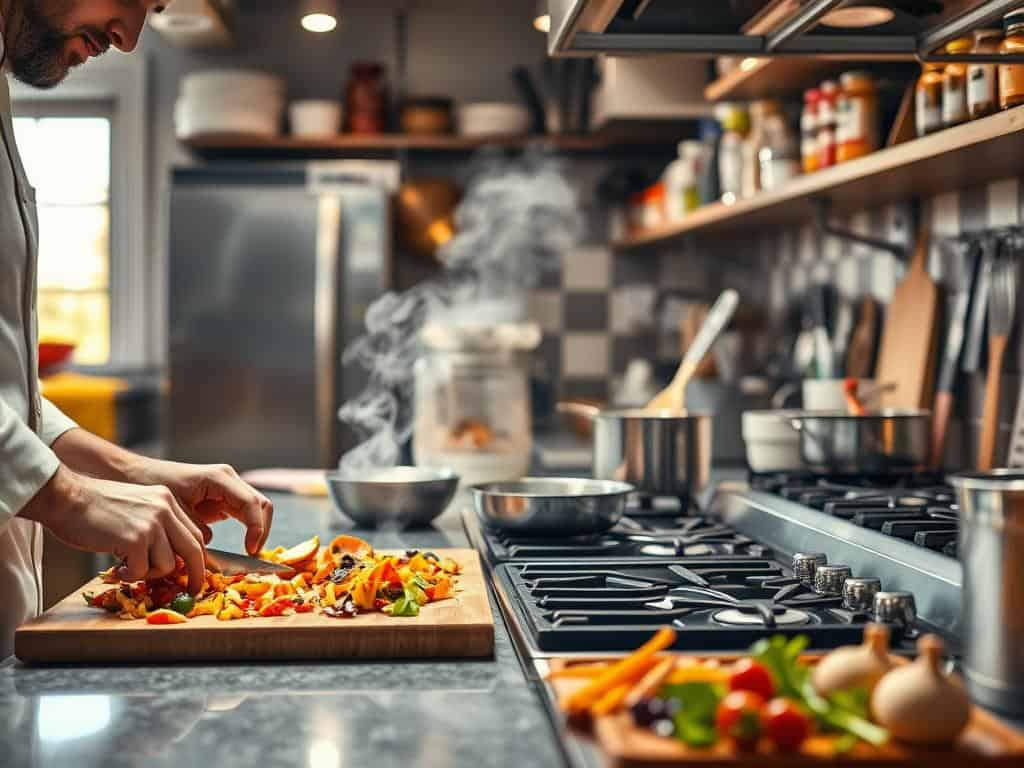
Cooking with Leftovers: Simple and Tasty Recipes
Using leftovers makes cooking more fun and helps reduce waste. I enjoy finding simple recipes to make tasty meals from leftover chicken and other ingredients. There are many options, like soups and pasta dishes that use up what’s left in my kitchen.
Easy Meal Ideas with Leftover Chicken
Leftover chicken is great for making many tasty meals. I like making chicken salad with different veggies for extra crunch. Another favorite is a tangy lemon soup with risotto, which brings out the flavors well.
For something heartier, I make chicken curry over rice. This lets the spices mix perfectly.
Using Extra Rice and Pasta
For rice and pasta, I often make stir-fries or casseroles. A simple baked ziti with leftover pasta is a hit at home. I also make Korean bibimbap with leftover veggies and a sunny-side-up egg.
Stale pasta can become a creamy casserole, making a fulfilling meal from spare ingredients.
Making Soup from Leftover Ingredients
Soup recipes are perfect for using up leftovers. I mix leftover veggies with proteins to make nourishing soups. A tomato-based soup with leftovers is always satisfying, topped with tasty extras.
Making an Asian-inspired soup with leftover chicken and rice is comforting and quick.
Conclusion
Cooking with leftovers is more than just a smart move; it’s a key way to reduce waste. It turns my kitchen into a place of creativity and care for the planet. Every time I use leftovers, I help the environment and learn new cooking skills.
It’s shocking to think that 30 to 40 percent of food in the U.S. goes uneaten. This means families like mine could save up to $1,500 a year. By planning meals better, I use every bit of food I buy.
Leftover meat and veggies can make amazing broths. Even onion skins and celery ends can create delicious soup stocks. Apps like Too Good To Go help me find food that would be wasted, saving money and reducing waste.
Using leftovers makes my kitchen more efficient. I can make tasty dishes like pasta bakes or burritos with leftover chicken and rice. This way, I get creative and respect the hard work that goes into growing and making food.
By turning leftovers into new meals, I make every bite count. It’s a step towards a more sustainable future. It’s a win-win for my taste buds and the planet.