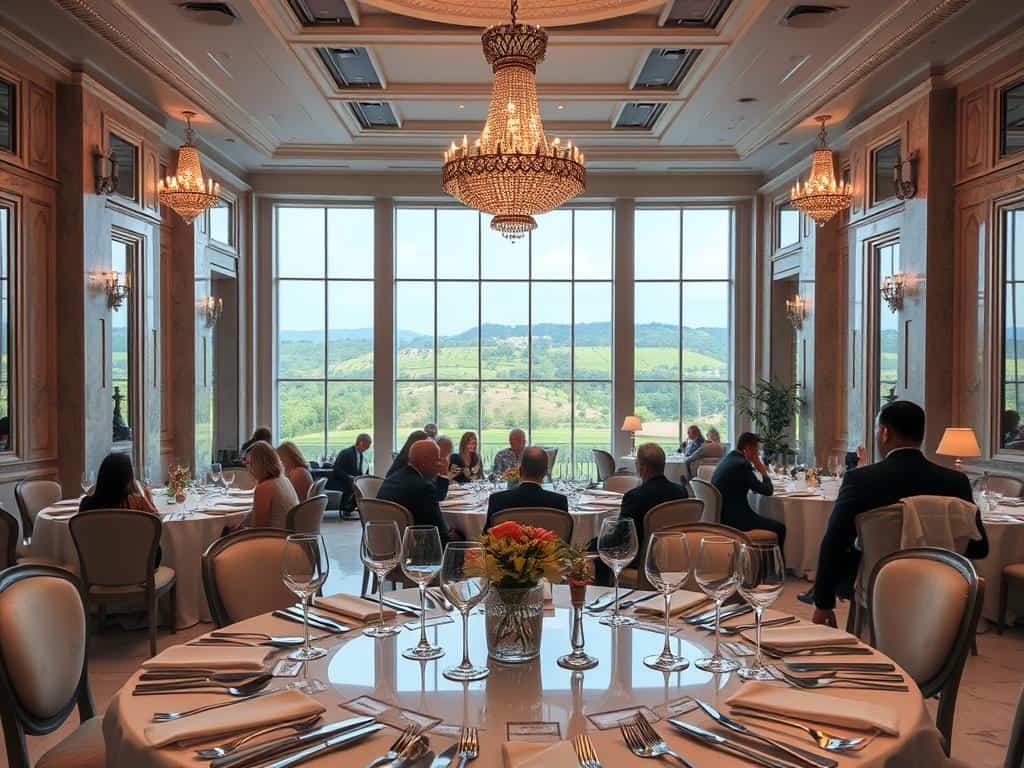
Did you know fine dining is just 250 years old? Ancient civilizations like Egypt, China, and Rome had grand feasts. But the modern luxury dining started in 18th-century France.
The French Revolution changed politics and cooking. Chefs left aristocratic kitchens to open restaurants. This made fine dining available to everyone, changing how we dine.
From La Grande Taverne de Londres in 1782 to Apéritif in Ubud today, fine dining has evolved. It now focuses on gourmet meals, sustainability, and unique experiences. Join me as we explore how fine dining has grown from royal feasts to something everyone can enjoy.
Key Takeaways
- Fine dining originated in ancient civilizations focused on social status and cultural refinement.
- The French Revolution transitioned luxury dining from aristocratic to public spaces.
- Modern interpretations blend traditional techniques with local flavors, enriching the gourmet meals experience.
- Sustainability and technology are increasingly important in today’s fine dining establishments.
- The history of fine dining reflects societal changes, adapting through eras of innovation.
Origins and Historical Development of Fine Dining
The history of fine dining goes back to ancient times. Back then, big feasts showed off social status and culture. In ancient Greece, symposia mixed food with deep talks, highlighting the beauty of dining.
The Romans took these events to new heights. They made meals into grand affairs with rare foods and new cooking methods. This set the early standards for fine dining.
The Beginnings of Culinary Artistry
In the Middle Ages, only the rich could enjoy fancy meals. These meals included fancy dishes and shows. The Renaissance brought changes, like using forks and having many courses.
This time laid the groundwork for today’s fine dining.
The Impact of the French Revolution
The 18th century in France saw the start of modern fine dining. Restaurants in Paris became popular. Chefs moved from serving the elite to opening their own places, making dining more accessible.
Marie-Antoine Carême was a key figure. He helped create haute cuisine. The introduction of à la carte menus let people choose what they wanted to eat, adding to the dining experience.
Key Milestones
Auguste Escoffier made French cuisine standard in the 19th century. His work on menus and kitchen setups is key today. The Michelin Guide, started in 1900, became a top guide for fine dining.
The 20th century brought nouvelle cuisine, focusing on light and fresh foods. Today, fine dining emphasizes sustainability, local ingredients, and unique experiences. It shows how dining has evolved over time.
Modern Interpretations of the History of Fine Dining
The world of fine dining has seen big changes in recent times. These changes have redefined what luxury cuisine means. Today, dining places focus on new trends that meet changing tastes and values. They also add environmental care and artistic touches to their food.
Shifting Trends in Luxury Dining
Looking into luxury dining, I see a big change. It’s all about using fresh, seasonal ingredients. Chefs turn simple ingredients into amazing dishes with new techniques and careful presentation.
Each dish is a work of art, showing off natural tastes and textures. It also looks great. Creative pairings and designs make meals exciting and memorable.
The Rise of Experiential Dining
Experiential dining is a big trend now. It’s not just about the food. It’s about the whole dining experience. Places like Ultraviolet in Shanghai use technology to make meals special.
Having a private chef at home is another part of this trend. It offers a unique, personal dining experience. These changes show how society views and enjoys fine dining differently now.
Conclusion
The future of fine dining is exciting, blending old elegance with new flexibility. Today, luxury dining is about personal connections and unforgettable moments. Private chefs bring gourmet meals to our homes, making dining a cozy, intimate affair.
Historically, fine dining was all about elegance and formality. But now, it’s changing to welcome more people. Thanks to figures like Anthony Bourdain, gourmet food is becoming more accessible. This shift focuses on the experience, not just the food.
The fine dining world is evolving, mixing tradition with new ideas. It’s embracing sustainable practices and tech like online reservations. The goal remains the same: to create memorable experiences for today’s diners, ensuring a bright future for fine dining.


