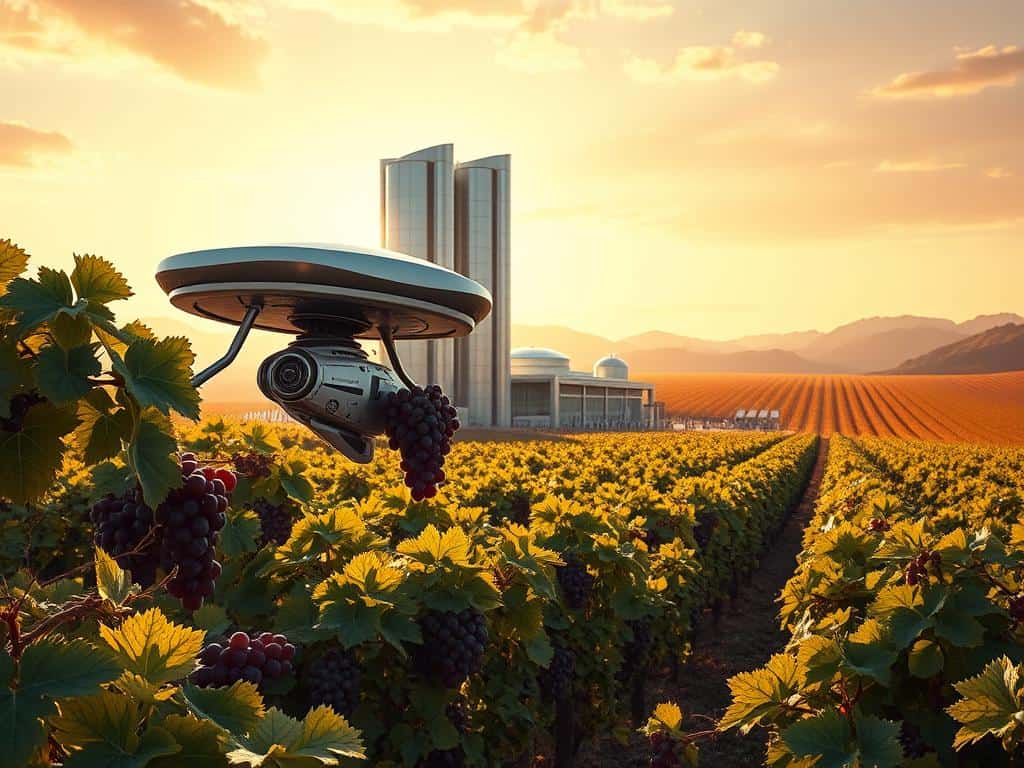
Did you know that by 2100, nearly 90% of grape-growing regions in France, Italy, and Spain may vanish due to climate change? This is a wake-up call for the wine industry as we approach 2050. With global temperatures set to rise by 4 degrees Celsius, the wine world is on the brink of a major transformation.
Wine lovers like me are excited about the new trends and innovations. Vineyards might move to places like the Netherlands and the UK. Winemaking could also use artificial intelligence. These changes are not just interesting; they’re essential for the future of wine.
Technologies like optical sorters and permeable blankets are being developed. They aim to protect vines from unpredictable weather. In this article, I’ll explore these advancements and what they might mean for wine by 2050.
Key Takeaways
- Climate change is threatening traditional wine regions with possible disappearance by 2100.
- Northern European countries may become new home for vineyards.
- New farming technologies are being created to fight extreme weather.
- The global demand for wine is expected to increase by 50% by 2050.
- Experts are looking into old grape varieties for new wines.
- The United States could become a top wine exporter by tapping into a new market.
The Future of Wine: Climate Change and Its Impact
Climate change is changing the world of wine, affecting vineyards everywhere. As temperatures go up, wine-making areas face big challenges. They need new ideas and quick actions to keep up.
Global Temperature Projections
Studies show a big rise in global temperatures, with big changes expected by 2050. Many wine areas could see temperatures go up by 4 °C. This could mess up traditional wine-making, with droughts and floods causing problems.
These changes could hurt grape growing, which needs stable weather. This is a big worry for places that have always had good weather for grapes.
Effects on Grape Varieties
Climate change affects more than just temperature. It also challenges certain grape types. Grapes like Chardonnay and Ugni Blanc might find it hard to grow in new conditions.
Places like Bordeaux are trying new grape types. They’re looking at grapes like Touriga Nacional and Albariño. This could help them grow grapes in changing weather.
Adapting to New Conditions
Vineyards are finding ways to adapt to these changes. They’re changing how grapes are planted to avoid too much sun. Some are even moving to places with better weather.
In Argentina, vineyards are being planted at high altitudes. This shows how wine areas might move north because of the weather. Vineyards are also using technology to fight off frost and hail. They’re trying new grape types like Nero d’Avola and Tempranillo.
Innovative Techniques in Winemaking
The world of winemaking is changing fast thanks to new tech. It’s exciting to see how these changes lead to a new era in AI winemaking. With climate change, new ways to farm are needed to keep wine production green. These methods not only help the planet but also make wine better.
AI Winemaking Advancements
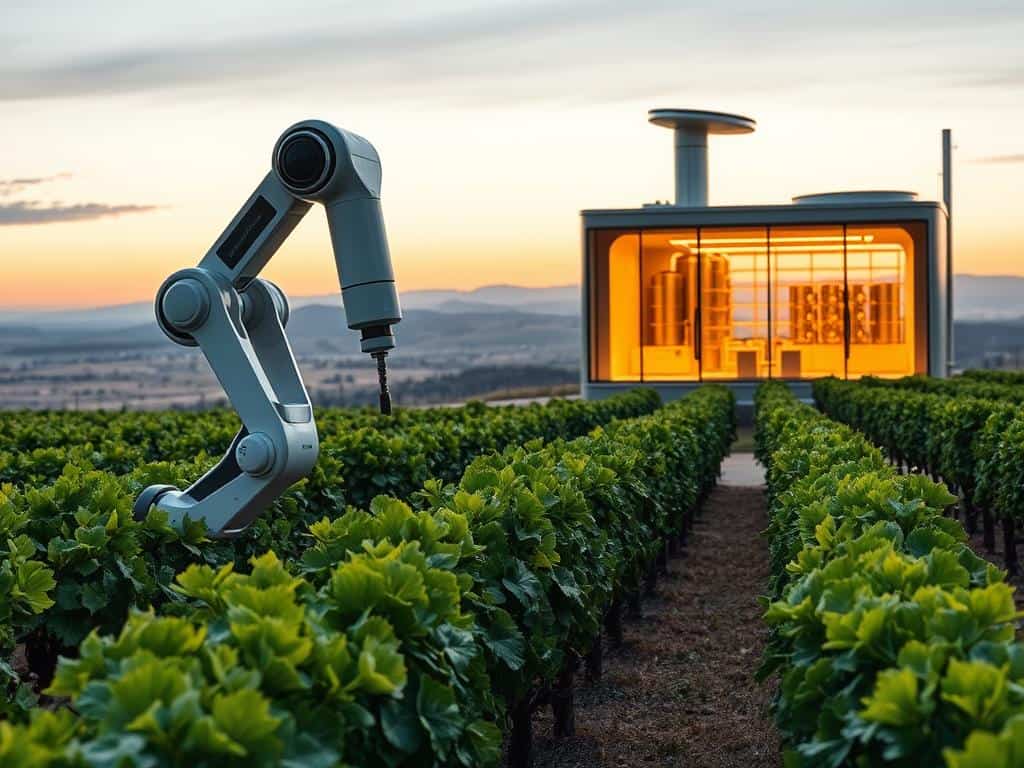
AI is changing vineyards for the better. AI sensors check on vine health and soil, giving winemakers useful info. This tech lets them make quick changes based on the weather. Also, blockchain makes wine production more open, so people know what they’re buying.
Futuristic Vineyards: New Regions and Cultivation
I’m discovering new places for vineyards, even in places thought not good for grapes before. Places like Northern Europe and high spots in the U.S. are trying grapes like Assyrtiko and Marselan. These grapes are tough and let winemakers make different kinds of wine for everyone.
Technological Innovations for Sustainability
New tech is key for making wine production green. Cover crops and no-till farming make soil better and stop erosion. Saving water is also important, with methods like drip irrigation and dry farming. And, making low-alcohol wines is becoming popular, as people want healthier choices without losing quality.
Conclusion
Looking at the future of wine by 2050, we see a mix of climate change and new ways of growing grapes. The wine world will change as it adapts to the environment. This change is not just about keeping up; it’s about being creative.
Wineries will have to find ways to keep quality high, even with new challenges. They might grow grapes in new places or use special grape types. This way, they can keep making great wine, even with the weather changing.
The demand for special wines is growing. People want unique wines that cost more than usual. The wine world is using new tech, like AI, to make wines that fit what people like. Being green is becoming more important, so wineries are getting better at being eco-friendly.
The U.S. wine industry needs to make wine more accessible and open. This will attract younger people to wine. By improving online shopping and making wine experiences fun, the wine world can stay exciting and true to its roots.
Even though the future is uncertain, the wine industry is ready to adapt and do great things. It’s an exciting time for winemaking, and the industry is all in.