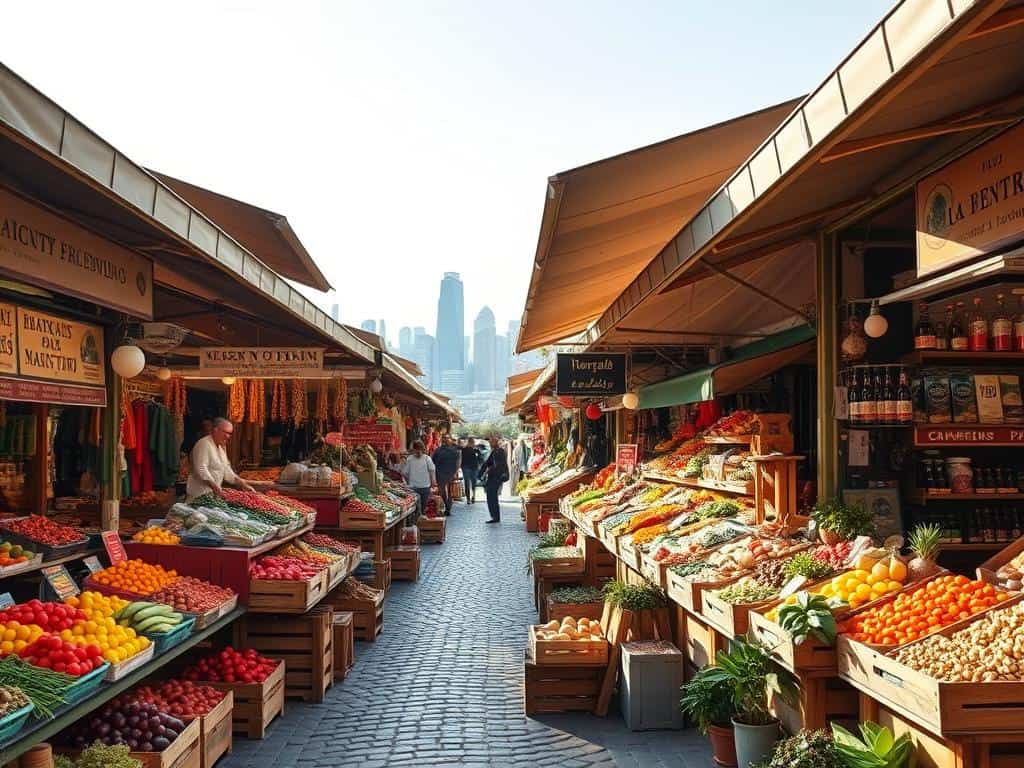
Did you know over 150,000 food markets exist globally? Each offers a unique taste of local culture. Exploring these markets is more than a food trip; it’s diving into a community’s vibrant lifestyle. For food lovers, these markets are essential for experiencing authentic flavors and engaging all senses.
The Ferry Building in San Francisco is a gem, with famous spots like Slanted Door and Cowgirl Creamery. Torvehallerne Market in Copenhagen boasts over 60 vendors, showing off culinary creativity and tradition. Markets like Bangkok’s Tor Kor Market and Istanbul’s Spice Bazaar offer unique experiences with fresh produce and spices.
I’ve traveled the world, enjoying fresh sushi at Tokyo’s Tsukiji Fish Market and Marrakech’s lively Jemaa el-Fna. Whether you’re after rare spices, vibrant fruits, or gourmet street food, this article will guide you. It will help make your next food adventure unforgettable.
Key Takeaways
- Food markets offer unique cultural insights and experiences.
- The Ferry Building highlights regional producers with diverse culinary offerings.
- Markets like Tor Kor in Bangkok feature exotic fruits and local delicacies.
- Some markets, like Findlay Market, incorporate community events into their offerings.
- Exploring markets can lead to discovering traditional and innovative cuisine.
- Food markets are vibrant venues filled with flavors, colors, and local traditions.
- Each market presents opportunities for authentic tasting experiences while traveling.
Introduction to Food Markets
Food markets are more than just places to buy food. They are vibrant hubs that show off local culture and community life. I love how these markets offer a wide range of fresh produce. This lets visitors experience the true taste of their culinary heritage.
Visiting markets like La Boqueria in Barcelona or Borough Market in London is a treat. They introduce us to local flavors that blend tradition and innovation. These markets are bustling with activity, becoming places where people from all walks of life come together.
Markets like Nishiki in Kyoto and Jemaa El Fna in Marrakech offer authentic experiences. They draw visitors into their lively cultures. Each market has its own story and importance, helping us understand a city’s food scene.
They encourage us to try new things and explore regional flavors. The sights, smells, and sounds of these markets create a memorable experience for food lovers.
Famous Food Markets Around the Globe
Exploring famous food markets is a journey into a world of flavors and cultures. These markets are alive with global cuisine, each with its own special tastes. The Mahane Yehuda Market in Jerusalem is a must-see. It has over 250 vendors selling fresh produce, spices, and baked goods.
In the evenings, it turns into a lively spot with restaurants and music. Be sure to try knafeh, fresh juices, and halva as you explore.
In London, Borough Market is a historical treasure. It dates back to the 11th century. This market is known for its high-quality produce, with strict inspections.
Walking through over 100 stalls, you’ll find artisanal goods that show off British food culture.
Cours Saleya in Nice, France, is another market you shouldn’t miss. It offers unique meats, like pigs’ ears. At night, it turns into a charming dining area with beautiful views of the South of France.
The Ferry Building Market in San Francisco is a gem on the west coast. It opened in 1898 and is a hub for artisanal cuisine. It has a farmers’ market that runs three days a week, attracting locals and tourists.
Traveling east, the Tsukiji Fish Market in Tokyo, Japan, is the world’s busiest fish market. Early birds can see tuna auctions and enjoy the freshest sushi breakfasts. It’s the heart of Japanese seafood culture.
Experiencing Local Culture Through Markets
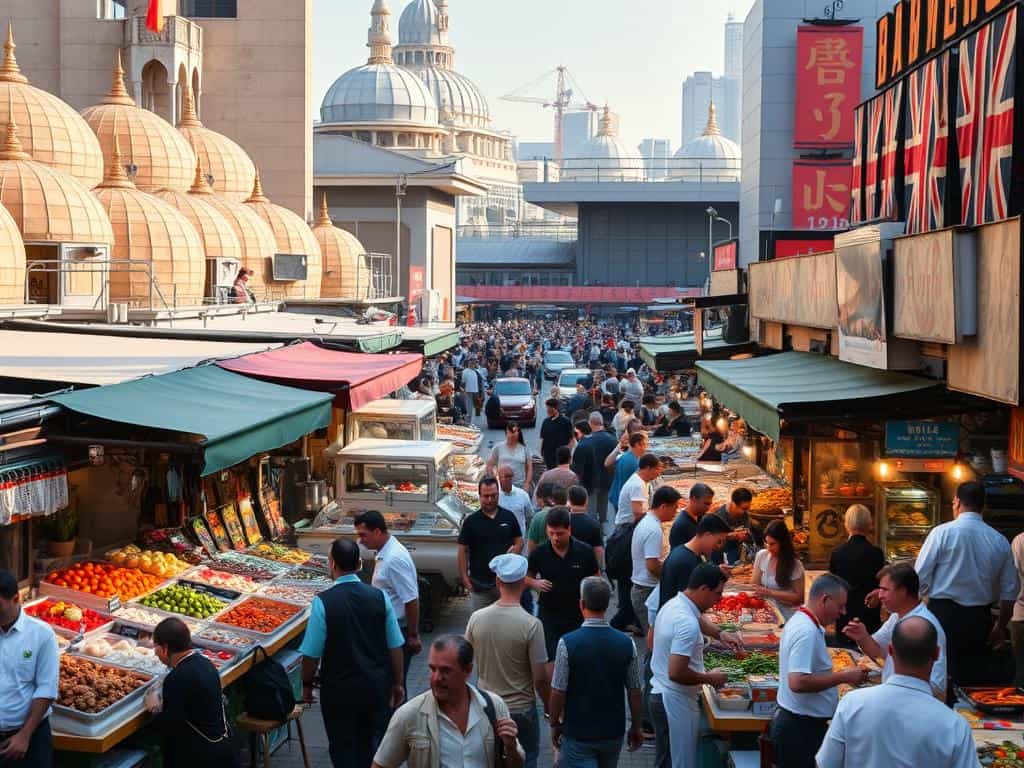
Visiting local markets lets me dive into the lively local culture of a place. These markets are cultural centers that show the traditions and values of their communities. I see handmade crafts and recipes that have been passed down for years.
Markets are where I see people connect and build trust. Bargaining is a fun way to feel part of the community. It makes every deal special.
Markets also celebrate their heritage with festivals and events. For example, the Luang Prabang Morning Market in Laos is filled with local rituals. The Bury Market in England offers traditional foods like black pudding, adding to the local flavor.
Women play big roles in these markets, running stalls and helping their families. At Kampot Central Market in Cambodia, I see chickens sold and cooked right there. Each stall has its own story, connecting the past to today.
Walking through markets, I taste fresh foods made with local flair. Vendors include farmers, fishmongers, artisans, and food truck owners. They all add to the market’s cultural vibe. These moments not only delight my taste buds but also teach me about local traditions and sustainability.
Conclusion
Exploring the world’s most amazing food markets, I found they’re more than grocery stores. They are key parts of local culture, showing off the culinary traditions and flavors of communities. Visiting these markets, I got to see how they offer a peek into local customs and daily life.
Every market is a culinary adventure, full of street food, fresh produce, and stories from vendors. Walking through the markets, I saw how important they are for food and community. They provide healthy foods and help people connect.
Now, with trends like Asian fusion and unique ingredients like Gochujang, Americans are trying new flavors. Gen Z is leading the way, seeking healthy, spicy, and adventurous food. I think these markets will keep growing, inviting all to explore global cuisine.
Looking back, I urge food lovers to explore these cultural treasures. It’s a journey that enriches your taste and understanding of the world.