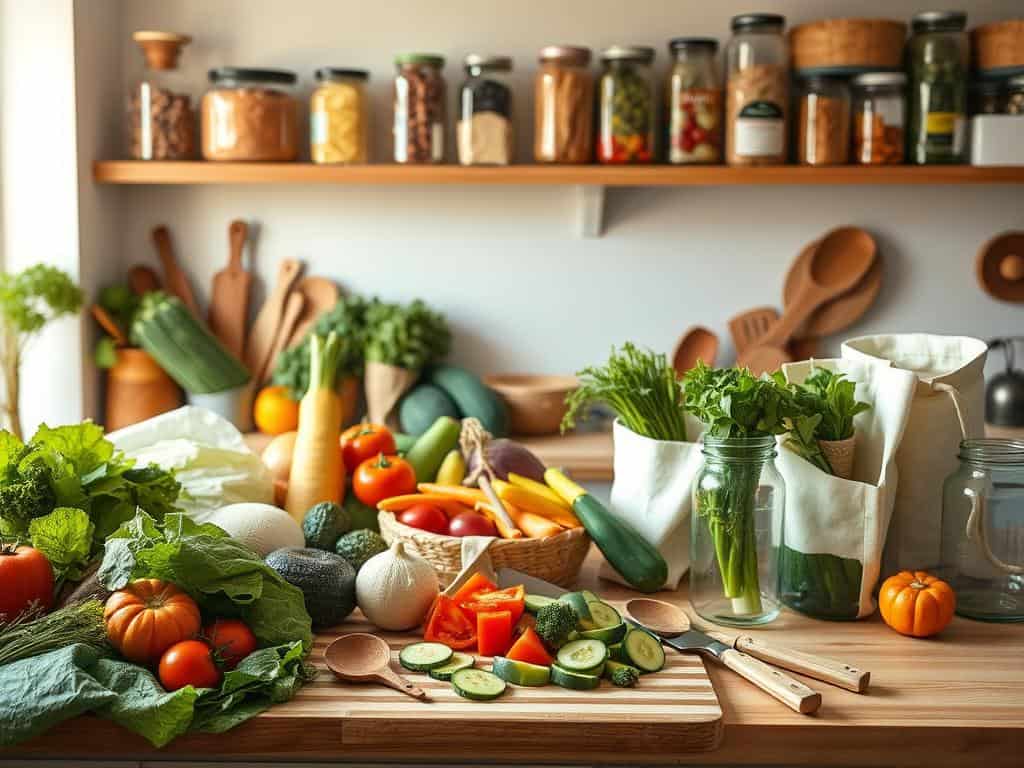
Did you know almost 40% of food in America is wasted? This fact shows we need to change how we cook by 2025. Zero-waste eating is more than a trend; it’s a big move towards being green in our kitchens. It makes us use every part of our food, from peels to stems, making cooking more thoughtful.
As we face more environmental issues, we must change how we cook. A lot of food is thrown away, like 31% to 40% in restaurants. This article will show how zero-waste cooking is changing our kitchens. It’s making us more creative and helping us live in a greener way.
Key Takeaways
- Nearly 40% of food produced in America is wasted.
- Zero-waste cooking utilizes every part of ingredients.
- Restaurants are adopting strategies to minimize food waste through portion control.
- Innovative chefs are creating unique dishes that make use of food scraps.
- Composting programs help turn food scraps into nutrient-rich soil.
- Eco-conscious dining is becoming a vital consideration for consumers.
Understanding Zero-Waste Cooking and Its Importance
Zero-waste cooking is a new way to use all parts of food, reducing waste. It makes us appreciate cooking and care for the planet. By using every bit of food, like radish greens and broccoli stems, we make tasty dishes.
This approach changes how we see food. It adds cultural and nutritional value to our meals.
Overview of Zero-Waste Cooking
Zero-waste cooking aims to cut down on food waste. In the U.S., about 73.9 million tons of food is wasted each year. This is about 31% of all food produced.
By using every part of food, we save money and eat better. Meal planning and cooking in batches help us use more ingredients. This reduces waste and makes our kitchens more efficient.
The Environmental Impact of Food Waste
Food waste harms the environment a lot. It’s a big source of greenhouse gas emissions, making up 18% in the U.S. This is like the pollution from 54 million cars.
Many people are talking about food waste on social media. This shows we need to find ways to use food better. Knowing how food waste affects us motivates us to reduce it.
How Zero-Waste Practices Reduce Greenhouse Gas Emissions
Zero-waste cooking helps fight climate change. By using leftovers and preserving food, we reduce waste. This lowers the environmental impact of food production and disposal.
Composting kitchen waste also helps. It turns scraps into fertilizer for gardens. Buying in bulk and choosing package-free items also supports a zero-waste kitchen. These actions make a big difference in reducing emissions.
Zero-Waste Food Trends Shaping Our Kitchens by 2025
The trend of zero-waste cooking is changing how we cook at home. I’m now using every part of ingredients, reducing waste. This makes my food taste better and is better for the planet.
Creative Uses for Food Scraps
I love using food scraps in my cooking. I turn vegetable peels and herb stems into tasty dishes. For example, beet greens make great salads, and fish bones create rich stocks.
Using these parts reduces waste and makes my cooking more sustainable. I also use celery leaves and fennel fronds to add depth to my meals.
Innovative Cooking Techniques for Minimal Waste
Using new cooking methods is key to zero-waste cooking. I freeze, dehydrate, pickle, and jam fruits and veggies to keep them fresh longer. This helps me use seasonal and local ingredients more.
Tools like the CHEF iQ Smart Cooker help me cook ingredients perfectly. Even tough parts become tender and delicious.
Embracing Local and Seasonal Ingredients
Using local and seasonal ingredients makes my cooking more sustainable. It’s better for the planet and tastes better. Visiting farmers’ markets helps me find fresh, flavorful veggies.
This approach connects me to my community and supports zero-waste cooking. It makes my cooking more enjoyable and sustainable.
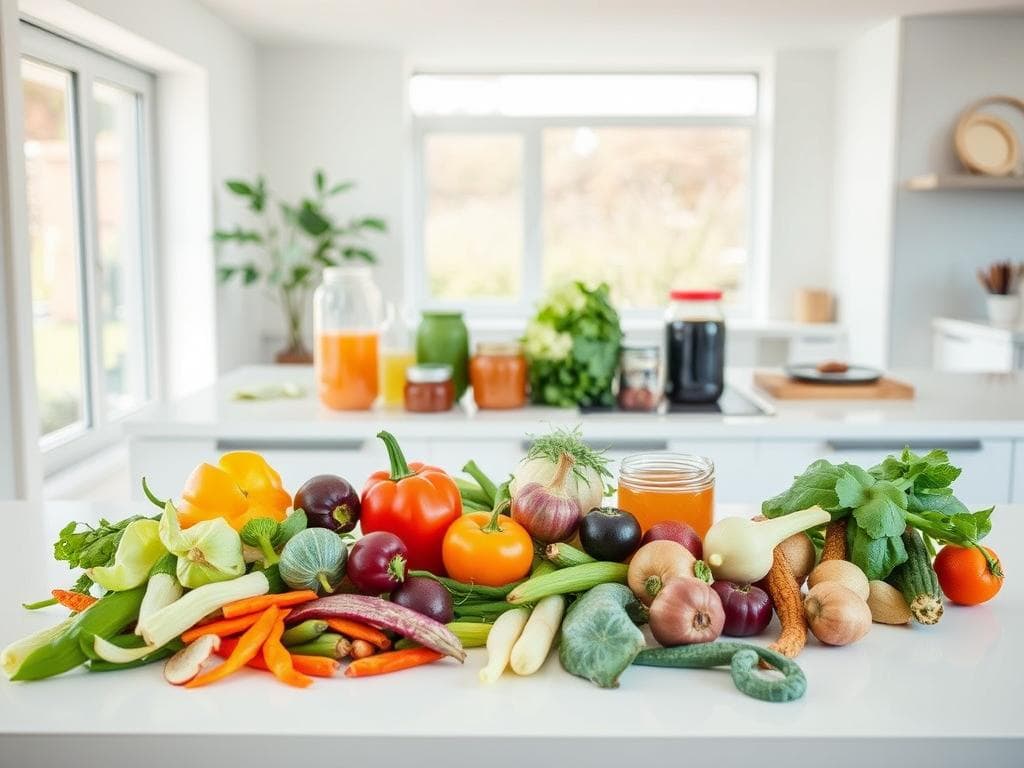
Conclusion
Looking ahead to 2025, zero-waste eating is leading the way in cooking. It fights against the huge problem of food waste, where one-third of all food globally is lost or wasted. This method also promotes sustainability and creativity in our kitchens.
By changing how we cook, we can lessen our harm to the environment. We can also get more creative with what we have. This makes our meals more meaningful and our planet healthier.
Adopting zero-waste cooking helps us connect more with our food and the Earth. It also saves money, with households possibly saving $700 to $1,800 a year. The UN’s goals to cut food waste by 2030 are also in line with this approach.
Every small step we take, like turning food scraps into new dishes or composting, helps our planet. I hope our meals will soon be more sustainable. They will also bring our communities closer through food sharing.