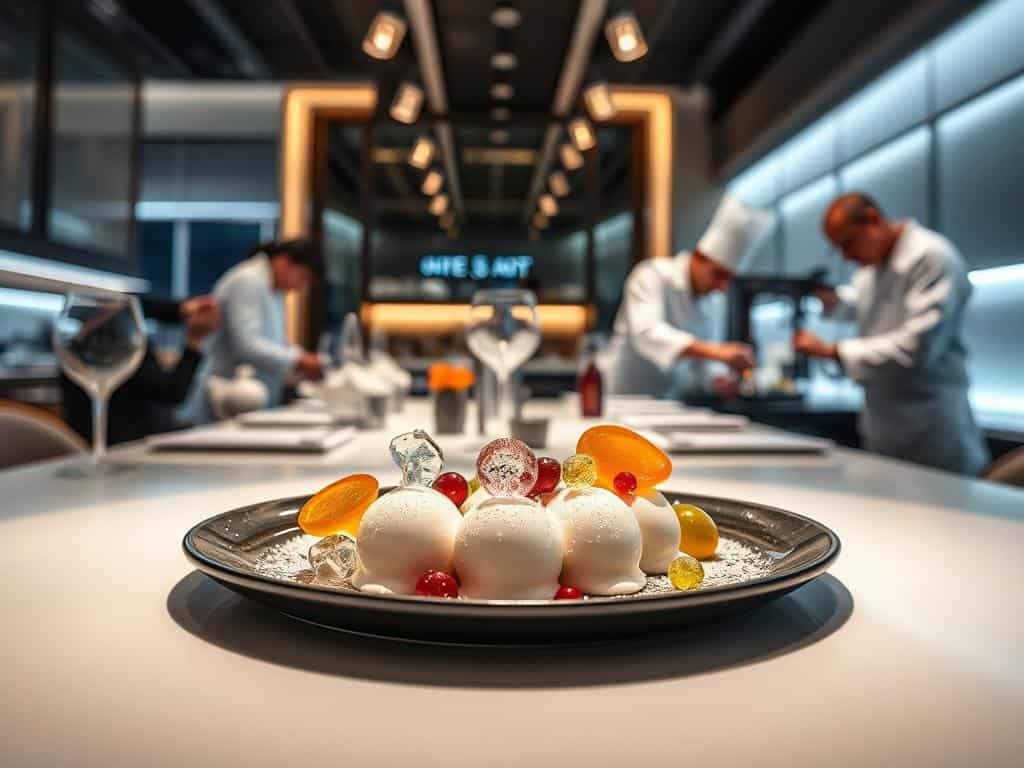
Did you know over 40% of The World’s 50 Best Restaurants list have used molecular gastronomy? This method, started by Nicholas Kurti and Hervé This in 1988, mixes science and cooking. It lets chefs change ingredients in new ways, making meals unforgettable.
Techniques like spherification and sous-vide add depth to food. Today, fine dining is more than just taste. It’s a mix of flavors, textures, and looks. Chefs like Heston Blumenthal and Ferran Adrià are changing how we see food.
I think dining is becoming a full experience. It’s a mix of science and creativity. This makes me excited for the future of food.
Key Takeaways
- Molecular gastronomy merges science and culinary art to create innovative dishes.
- Key techniques include spherification, foams, sous-vide, and liquid nitrogen.
- It emphasizes multi-sensory dining experiences that engage sight, taste, and smell.
- Chefs are increasingly viewed as culinary artists pushing creative boundaries.
- Modern fine dining reflects an emphasis on experimental techniques and local sourcing.
The Evolution of Molecular Gastronomy
Exploring the origins of molecular gastronomy sheds light on its impact on modern cooking. It started as a scientific study of how cooking changes food’s physical and chemical makeup. The term was first used by Nicholas Kurti and Hervé This in the late 20th century, highlighting its scientific roots.
Origins and Definition
Chefs began using science in their cooking, moving away from old methods. They started using new techniques like emulsification and gelification. These changes altered food’s texture and presentation.
Now, molecular gastronomy is found in many kitchens, not just fancy restaurants. Chefs like Ferran Adrià and Heston Blumenthal made these techniques popular. They introduced spherification and sous vide cooking to the world.
The Rise of Experimental Cuisine
Experimental cuisine has brought a new wave of creativity to cooking. Chefs use advanced methods to improve flavors and change ingredients. This leads to dishes that excite all our senses.
Techniques like using agar and sodium alginate help create dishes that look as good as they taste. This fusion of science and art continues to grow, blending culinary science with creativity.
Molecular Gastronomy Trends
In the world of molecular gastronomy, new techniques are changing how we cook. Chefs mix science and art, creating dishes that amaze and delight. These dishes are not just tasty but also exciting to try.
Innovative Techniques Revolutionizing Cooking
Techniques like foams, gels, and spherification lead the way in molecular gastronomy. They let chefs show off familiar foods in new ways, making meals special. Hydrocolloids, such as agar agar and xanthan gum, help create different textures.
Sous vide cooking shows how controlling temperature can improve flavor and texture. It makes meals both new and enjoyable.
Culinary Science and Its Impact on Fine Dining
Culinary science has greatly influenced fine dining. It inspires chefs to try new things, blending science with creativity. This trend also meets the demand for sustainable dining, combining innovation with tradition.
I think molecular gastronomy will always inspire chefs. It pushes the limits of what’s possible in cooking.
Creating Multi-Sensory Dining Experiences
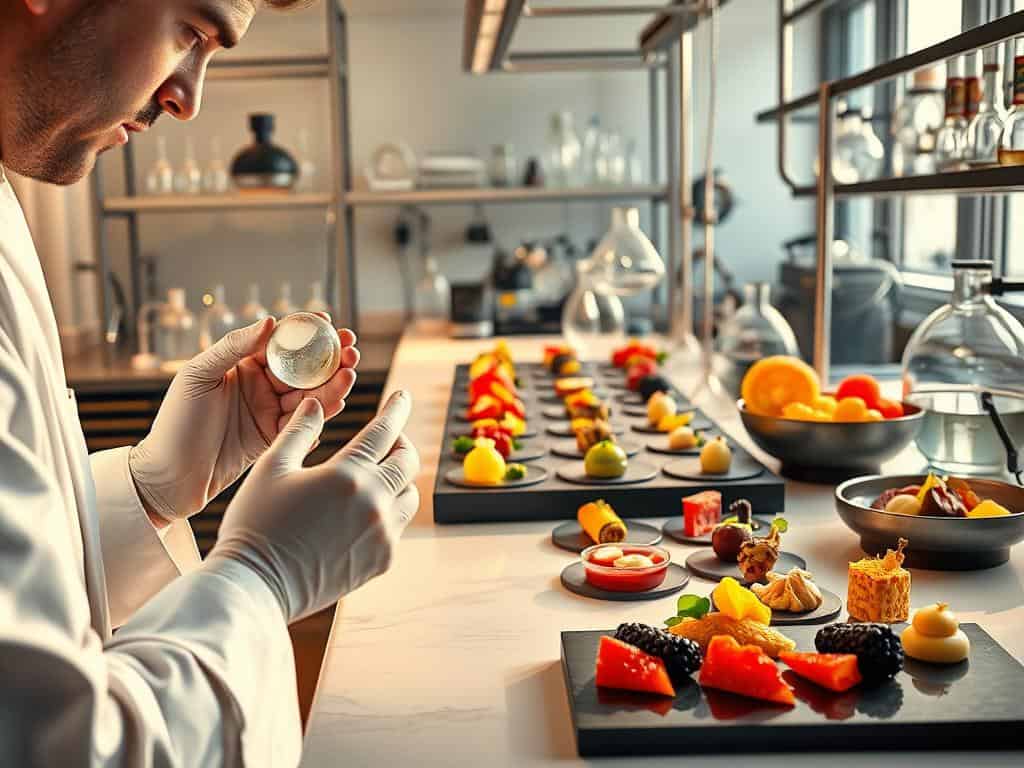
Multi-sensory dining is at the heart of modern cooking. It combines innovation and creativity in a unique way. Chefs use advanced techniques to change how we experience food. This makes every meal a full sensory adventure.
A New Approach to Flavor and Texture
Chefs today are changing how we see flavor and texture. They use new ingredients and techniques like liquid nitrogen. Famous chefs like Ferran Adrià and Heston Blumenthal have led this change.
Research shows 75% of people want to pay more for unique dining experiences. These experiences create lasting memories and shape our culture. They turn eating into a form of art.
The Role of Technology in Modern Cooking
Technology is key in modern cooking. Restaurants use new tools and methods to improve their service. This includes precision sous-vide cooking for better quality.
Social media, like TikTok, also plays a part. It makes people interested in unique dining experiences. The mix of technology and art in cooking makes dining more engaging and creative.
Conclusion
The future of fine dining is changing thanks to molecular gastronomy. It combines science and cooking in new ways. This approach changes how we make and enjoy food.
Chefs like Ferran Adrià and Heston Blumenthal have led this change. They show how to mix creativity with science to make amazing meals. This inspires others to try new things in the kitchen.
Molecular gastronomy isn’t just about new cooking methods. It’s about creating experiences that touch all our senses. As people look for unique dining experiences, this method becomes more important. It leads to new trends that are both personal and sustainable.
I think science in cooking will make fine dining even better. It can change how food feels, tastes, and looks. Molecular gastronomy is key to this change, making every meal unforgettable.