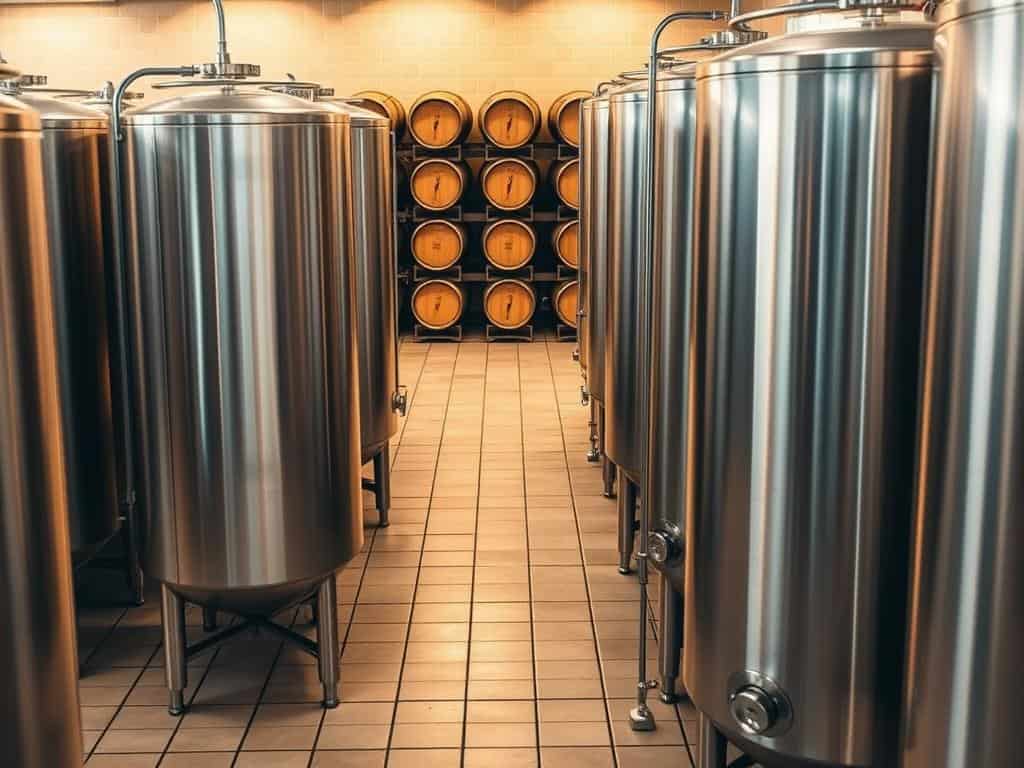
Did you know that about 85% of wines today are made in oak or stainless steel tanks? This step in winemaking greatly affects the taste and feel of the wine. I’ll look into how oak and stainless steel tanks change the winemaking process. Knowing these differences helps wine lovers choose better and enjoy their drinks more.
Key Takeaways
- Stainless steel tanks keep the wine fresh and acidic, perfect for crisp whites and rosés.
- Oak barrels add extra smells and tastes, making red wines more complex.
- Oak’s holes let in controlled air, changing the wine’s texture.
- French and American oak give different tastes to the wine.
- Knowing about tank materials helps wine fans see the differences in taste and style.
- Stainless steel keeps the wine’s true taste, without adding outside flavors.
Understanding Wine Fermentation Styles
Wine fermentation styles are key in winemaking. It’s amazing how yeast turns grape juice into wine. This process creates the flavors and smells that make different wines unique.
Winemakers use various techniques, like stainless steel or oak tanks. These choices affect the wine’s subtle flavors.
The Importance of Fermentation in Winemaking
Fermentation is vital for making great wines. It shows how things like temperature and yeast can change the wine. Stainless steel tanks are popular for their control and durability.
These tanks can last for decades and are easy to clean. They provide a consistent environment for fermentation.
How Fermentation Influences Wine Characteristics
The fermentation environment shapes the wine’s taste. Open tanks help red wines by letting heat out and increasing flavor. Closed tanks, used for whites, keep the wine fresh by preventing oxidation.
Using oak barrels for aging adds special flavors. Choosing the right fermentation style is essential for the wine’s quality.
Examining Oak Wine Fermentation Tanks
Oak fermentation is special in winemaking. Oak barrels are key for flavor and complexity. The type and age of oak affect the wine’s taste, giving different experiences.
Flavor and Aroma Contributions of Oak Barrels
Oak barrels add flavors like vanilla, toast, and spice. French oak brings hazelnut and smokiness, while American oak adds vanilla and coconut. New barrels give strong flavors, while older ones add subtle notes.
The wine and barrel interact, adding compounds like lactones and volatile phenols. This makes the wine’s aroma more complex.
Oxidation and Micro-Oxygenation in Oak Fermentation
Oak barrels’ porosity allows for micro-oxygenation. This process softens tannins, making the wine smoother. Controlled oxidation helps develop secondary aromas in aged wines.
Studies show oak chips and powder increase desirable compounds in wine. This supports the idea that oak fermentation improves flavor and quality.

Stainless Steel Wine Fermentation Tanks
Stainless steel fermentation tanks have changed winemaking. They offer many benefits that improve wine quality. These tanks keep wine fresh and let the fruit flavors shine through.
Advantages of Using Stainless Steel
Stainless steel tanks come in many sizes, from 15 liters to 6700 liters. This makes them perfect for any winemaking scale. They come in different shapes, like round or rectangular, to fit any space. Some tanks even have cooling jackets for better temperature control.
Stainless steel tanks are very durable. They’re made from high-quality materials like AISI 304 and 316. They have features like adjustable pads for stability and self-emptying options. These features make winemaking easier and more efficient.
How Stainless Steel Maintains Wine Purity
Stainless steel tanks help keep wine pure. They’re airtight, which stops oxidation. This keeps the wine’s natural taste. The tanks are easy to clean, which helps avoid sediment that can affect taste.
In short, stainless steel tanks improve wine quality and keep it pure. Brands like Speidel and Marchisio offer a wide range of sizes and features. They lead the way in the industry.
Conclusion
Choosing between oak and stainless steel wine tanks is key for winemakers. It greatly affects the wine’s taste. Oak barrels add special flavors and smells, making the wine richer. They also let oxygen in, adding depth.
But, oak tanks need care to avoid contamination. Stainless steel tanks, on the other hand, are great for controlling temperature and are durable. They’re also easy to clean and resist corrosion.
Stainless steel tanks help make wine quickly and safely. This is important for many wine types. Whether I prefer oak or stainless steel depends on the wine I’m making.
Learning about these techniques has made me appreciate winemaking more. Knowing about both oak and stainless steel tanks helps me choose better. It lets me enjoy the art of making wine even more.