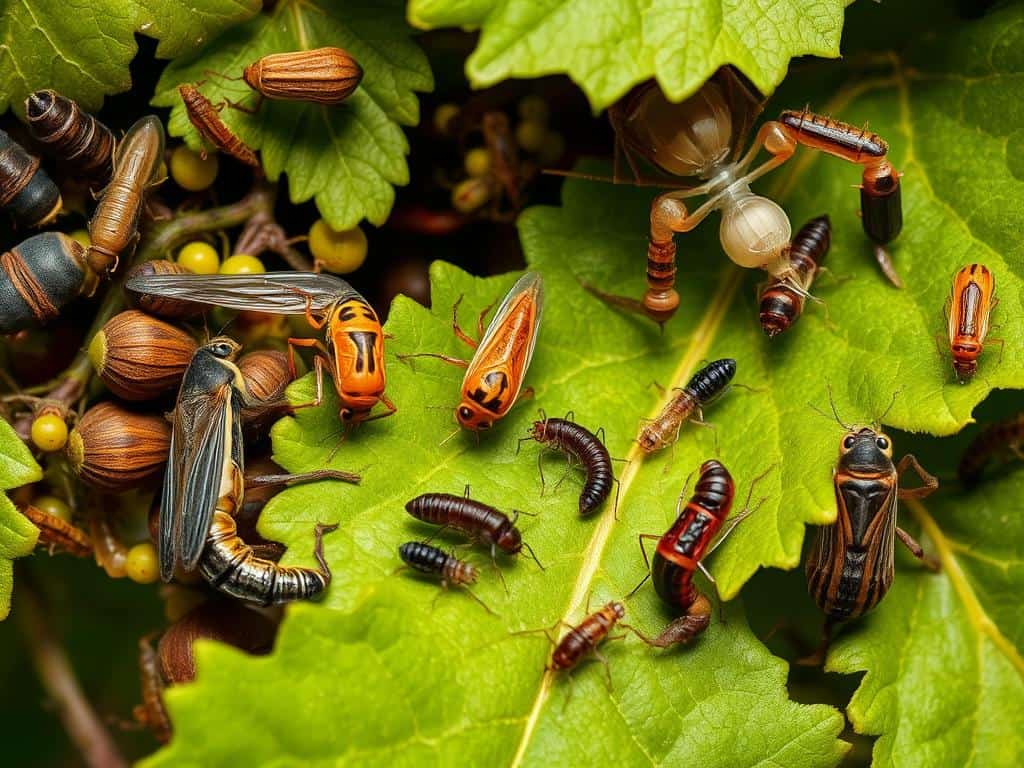
Did you know that vineyards and other crops lose 20-40% of their value each year? This loss adds up to about $220 billion annually. Vineyard owners like me face many threats that can harm our crops and vines. These include birds, deer, pests, and unpredictable weather.
Effective wildlife control and soil management are key to keeping our vineyards healthy. In the next parts, we’ll look at these threats, common pests, and how to manage them. By working together, we can protect our vineyards from these big challenges.
Key Takeaways
- Vineyards face significant threats from wildlife and pests, impacting yields and grape quality.
- Understanding the nature of pests like phylloxera and downy mildew is vital for effective management.
- Implementing wildlife control measures can help protect crops from birds and deer.
- Soil management also plays a critical role in maintaining vineyard health.
- Strategies like netting, biological control, and targeted pesticides are effective in managing pests.
- Proactive measures can save vineyards from major financial losses each season.
Identifying Major Threats to Vineyards
It’s key to know what dangers vineyards face to manage them well. Many things can harm grape health and yield. Birds, invasive insects, and extreme weather are big risks that vineyard owners must tackle early.
Birds: A Constant Challenge
Birds like starlings and blackbirds are always a problem during grape ripening. They eat grapes and damage blossoms, which hurts pollination. Bird netting is a great way to stop them, creating a barrier that keeps birds away from the grapes.
Invasive Insects and Their Impact
Insects like yellowjackets, hornets, and wasps are bad for vineyards. They fight for food and harm grape plants by eating leaves and fruit. Vineyard insect netting is a strong, UV-stable mesh that keeps these pests out.
Extreme Weather Events
Climate change has made weather more extreme, hurting vineyards. Storms, hail, and warm weather can damage grapes. Wind can knock fruit off, and frost can harm vines. Using netting can help protect against these dangers.
Understanding Vineyard Pests
Vineyards face many challenges from pests. Knowing these pests is key to managing them well. These pests can harm vines and grapes, affecting wine quality.
Common Vineyard Pests and Their Effects
Phylloxera, a type of aphid, almost destroyed the wine industry in the late 1800s. It attacks vine roots, causing damage. Today, grafting vines onto resistant American rootstocks helps fight phylloxera.
Nematodes, tiny roundworms, also harm vine roots. Using resistant rootstocks like 039-16 controls them. Leaving vineyards fallow can also starve nematodes.
Mites, like spider mites, harm vine leaves. This reduces photosynthesis and vine health. To control them, we use predatory mites or oils. Grape berry moths also harm grapes by laying eggs inside them. We use pheromones and neem oil to stop them.
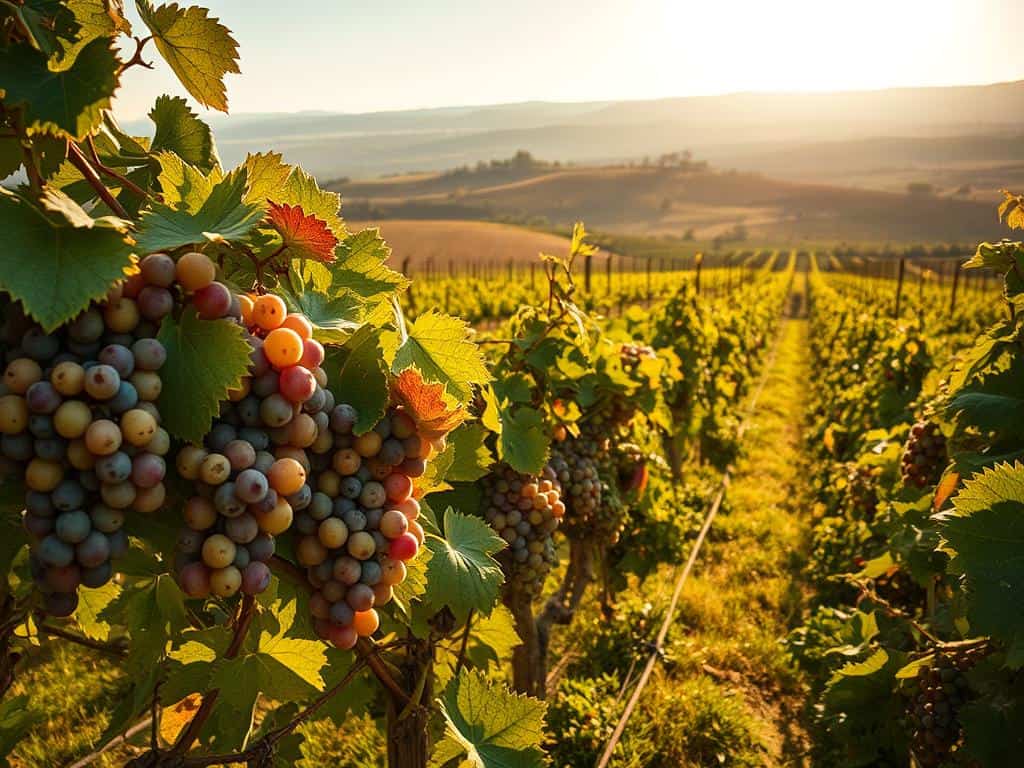
How Pests Affect Grape Quality
Pests damage vines and grapes. The spotted wing Drosophila is a new threat. Pruning and removing leaves helps control it.
Fungal diseases like powdery mildew and downy mildew also harm grapes. We treat powdery mildew with sulfur dust. Downy mildew is managed with copper-based Bordeaux mixtures. Botrytis, or noble rot, is good for some wines but bad for red grapes.
Pierce’s Disease and Leafroll Disease are major threats. Pierce’s Disease, spread by sharpshooters, can kill vines quickly. We monitor pests and remove diseased vines to fight these diseases.
Managing vineyard diseases and pests is a constant battle. Each pest or disease needs its own solution. This keeps my vineyard healthy and productive.
Effective Strategies for Pest Management
Managing pests in vineyards needs a mix of methods. Using physical barriers, biological controls, and chemical pesticides is key. These strategies help keep vines healthy and grapes of high quality. Here are some effective methods for vineyards.
Physical Barriers and Netting Solutions
Physical barriers are a first defense against pests. Netting keeps birds and animals away from grapes. It also stops invasive insects. The right materials let sunlight and air through, protecting plants without harming them.
Biological Control Methods
Biological control makes pest management more sustainable. Beneficial bugs like mites and wasps control pests naturally. Using them reduces the need for chemicals. They help keep the vineyard ecosystem balanced, promoting vine health.
Chemical Pesticides: When and How to Use Them
Chemical pesticides should be a last choice. When pests are a big problem, biorational pesticides are a better option. They are made from natural materials and target pests well. Using them responsibly protects the environment and vineyard health.
Conclusion
In my journey through vineyard management, I’ve seen many challenges. Pests like grapevine moths and leafhoppers are big problems. So is extreme weather. Understanding these threats is key to keeping our vineyards healthy.
Effective pest control is vital. It helps our vineyards fight off pests and weather changes. Using organic and biodynamic methods helps keep the ecosystem balanced.
Cover crops, for example, support beneficial insects. This can help control pests. New methods like integrated pest management (IPM) and technology will help us fight pests better.
By focusing on ecological balance, we protect our vineyards. This ensures our wines stay true to their terroir. With a commitment to climate resilience and new techniques, our vineyards will thrive for years to come.