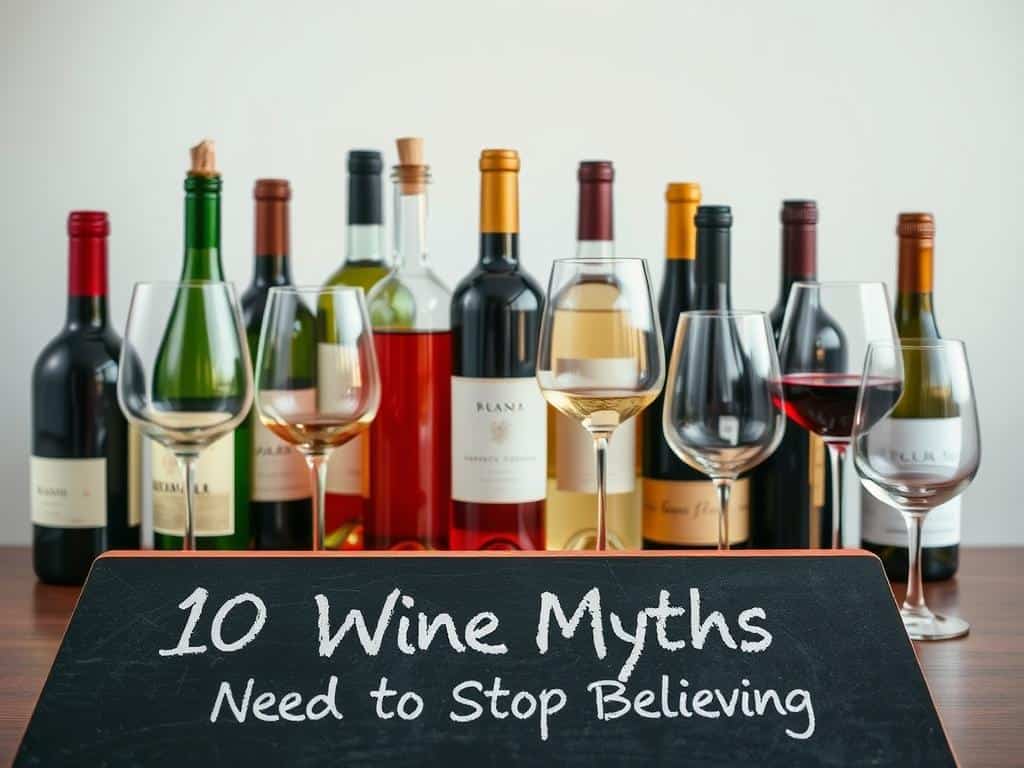
Did you know almost 50% of wine drinkers think expensive wines are always better? This fact shows how common misconceptions about wine are. It makes me want to look into the myths that confuse even the most experienced wine lovers.
While enjoying your favorite wine, think about how these myths can affect your experience. They can make us misunderstand and enjoy wine less. From the idea that red wine goes with meat and white with fish to myths about serving temperatures, knowing the truth can change how we taste wine.
In this article, I’ll share common wine myths and how to debunk them. This will help you enjoy your favorite wines even more. As we explore, we’ll face these myths and find the facts that will make your wine tasting better.
Key Takeaways
- High price does not guarantee better quality; many affordable wines are exceptional.
- Red wines should be served at controlled temperatures for optimal flavor.
- Myths about decanting and aging need clarification for true wine enjoyment.
- Wine packaging has evolved, and innovative options can maintain quality.
- Understanding acidity enhances the perception of balance in wines.
Understanding Common Wine Myths
Many people have wrong ideas about wine. This includes how to pair wine with food, how to age wine, and what temperature is best for serving wine.
The Myth of Red with Meat, White with Fish
It’s often thought that red wine goes with meat and white wine with fish. But this isn’t always true. The right wine for a dish depends on the flavors of both the food and the wine. For example, a fruity Beaujolais can pair well with light chicken, just like a rich Cabernet Sauvignon can with steak.
It’s important to try different pairings to find what you like best.
Decoding the Aging Debate
Many think that older wine is always better. But this isn’t true for most wines. Only some wines, like those with lots of tannins and acidity, get better with age. Most wines are meant to be enjoyed soon after they’re bottled.
Choosing fresh wines can make for a more enjoyable experience.
Room Temperature: A Misconception
The idea of serving red wine at “room temperature” isn’t always right. Room temperature can vary and not suit every wine. Lighter-bodied reds are best when slightly chilled, between 13˚C-18˚C (55˚F-64˚F).
The right temperature is key to enjoying wine. It brings out the best in the wine’s aroma and flavors.
Debunking Specific Wine Myths
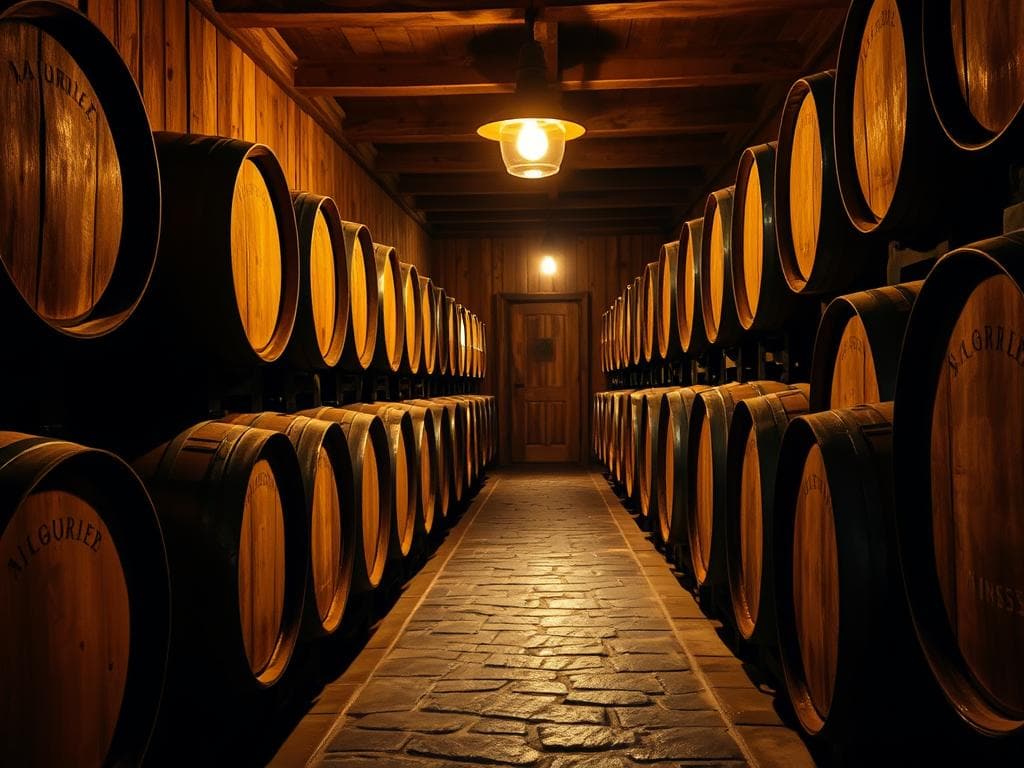
Many myths surround wine, including the idea that longer barrel aging means better quality. But, many modern drinkers prefer wines with less oak. Wines like Tyrrell’s Vat 1 Hunter Semillon show quality can exist without long oak aging.
Does Time in a Barrel Mean Better Quality?
The belief that more barrel time equals better wine is being questioned. Aging can improve some wines, but not all. For example, GB Burlotto’s Pelaverga cuvée is best enjoyed young. This changes how we see barrel aging in wine making.
Do All Wines Need to Be Decanted?
Decanting wine is not necessary for all. Only wines with lots of sediment or older vintages really benefit. For most wines, decanting can change the taste in ways you might not like.
Sulfites: The Headache Culprit?
Sulfites in wine are often blamed for headaches. But, my own experiences show that dehydration and alcohol sensitivity are bigger factors. While sulfites are in some wines, histamines often affect how we feel more.
Breaking Down Other Persistent Wine Myths
Many myths surround wine, leading to wrong beliefs about quality and fun. It’s interesting to look into these myths. This includes the idea that pricey wine is always better, the truth about wine packaging, and how red wine can be enjoyed in summer.
Are All Expensive Wines Superior?
The belief that pricey wine is always better is wrong. Wine prices depend on where grapes are grown, winemaking methods, and the winery’s fame. Many great wines are affordable, and taste tests show people often like mid-priced ones. So, cheap wines can be just as enjoyable as expensive ones.
The Truth About Wine Containers
The wine packaging world has changed a lot, bringing new options. Boxed and canned wines keep wine fresh, making it fun to drink without glass bottle worries. These new packages are handy and keep quality high, proving good wine doesn’t need a classic bottle.
Red Wine and Summer Are Not Friends
Red wine can be refreshing in summer, served a bit cooler. This opens up new ways to enjoy red wine outside, with Pinot Noir and Zinfandel being great choices. Enjoying red wine in summer adds variety to wine fun all year.
Conclusion
Exploring the world of wine has shown me that many myths can block true enjoyment. By clearing up these myths, I can make better choices. This way, I appreciate wine more.
For example, it’s not true that expensive wines are always better. Many great wines cost between $20 and $40. This shows that quality isn’t just about price.
Knowing what affects a wine’s quality is key. This includes the grape type, region, and what you like. It moves us away from old ways and towards better wine choices.
Serving temperatures and how to store wine are also important. But, these are often not understood well. Each wine is unique, inviting me to try different styles and grapes.
My quest to debunk wine myths has made my experience richer. I urge others to question myths, follow their taste, and enjoy wine’s variety. This way, we can truly enjoy the drink and the stories it tells.