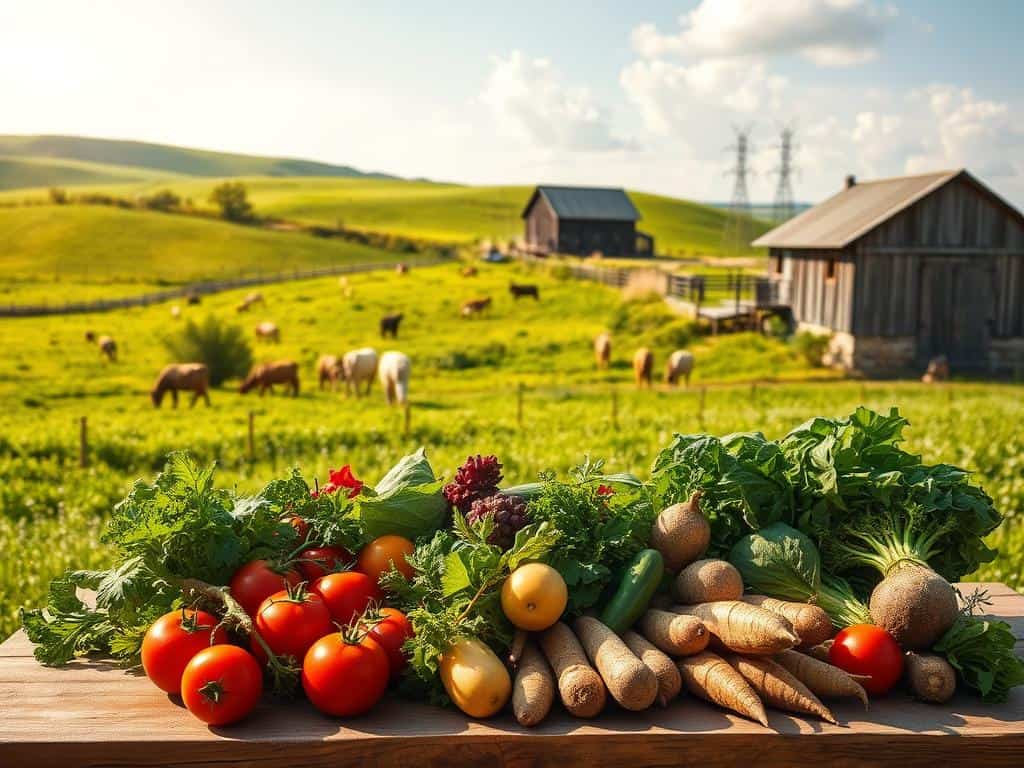
Did you know 69% of consumers choose foods based on freshness, locality, and organic quality? This shows how big the farm-to-table movement is. It has changed how we eat in the United States. It started over 40 years ago with Alice Waters at Chez Panisse.
The farm-to-table way means using fresh, organic, and local foods. It makes our meals better and helps the planet. This movement is changing how we eat and connect with our food. It brings us closer to the farmers who grow it.
Key Takeaways
- The farm-to-table movement prioritizes fresh, organic, and locally grown ingredients.
- Farmers’ markets in the U.S. have quadrupled in number over the last two decades, reflecting increasing consumer interest in local produce.
- 69% of consumers consider freshness and locality important for purchasing decisions.
- Innovative chefs are redefining farm-to-table cuisine by incorporating global flavors and seasonal cooking.
- Sustainability practices such as canning surplus produce and composting are central to the farm-to-table ethos.
- By 2025, small farms are expected to provide 35% of restaurant ingredients, highlighting the shift towards local sourcing.
Understanding the Roots of the Farm-to-Table Movement
The farm-to-table movement is more than just a food trend. It’s a big change towards eating in a way that’s good for the planet. It started many years ago, with people wanting better food and supporting local farmers.
In the 1960s and 1970s, the hippie culture helped start this movement. They believed in eating food that’s local and organic. At the same time, people were learning how bad processed foods were for their health and the environment.
The Historical Context of Farm-to-Table
Alice Waters opened Chez Panisse in 1971. It became a place where food was made with care, using local ingredients. This idea changed how people thought about food.
In 1986, the Slow Food Organization started in Italy. It spread the idea of eating food that’s close to home. This movement is all about knowing where your food comes from and how it’s made.
Freshness and Taste as Core Principles
Freshness and taste are key to farm-to-table. Food that’s picked locally tastes better and is healthier. It’s also better for the planet.
By 2013, farmers were feeding more people than ever before. This shows how important fresh food is. Schools are now using local farms to give students healthy food.
Benefits of the Farm-to-Table Movement
The farm-to-table movement offers many benefits beyond just good food. It boosts local economies and helps the environment. By choosing local food, communities support their farmers and protect the planet.
Support for Local Economies
Buying local food helps communities in big ways. It strengthens ties between restaurants and farms. Every dollar spent on local food stays in the community, helping family farms and businesses.
By supporting local farms, we keep agriculture diverse. We also fight against big corporations taking over.
Sustainability and Environmental Impact
Farm-to-table practices are great for the environment. They cut down on carbon emissions and reduce our ecological footprint. By choosing local, we make food systems more reliable and secure.
This approach encourages sustainable farming. It helps us conserve the environment. Supporting these efforts means enjoying fresh food while helping our planet.
Why Farm-to-Table Movement Is Here to Stay
The farm-to-table movement is growing fast. This is because people want to know where their food comes from. They value quality and want to support ethical farming.
The Consumer Demand for Transparency
Today, people want a personal connection to their food. They look for information on the food’s origin and how it’s made. This desire for transparency builds trust and supports fair farming practices.
Restaurants and stores are listening to these needs. They now share details about their food sources. This move not only keeps customers coming back but also supports important social causes.
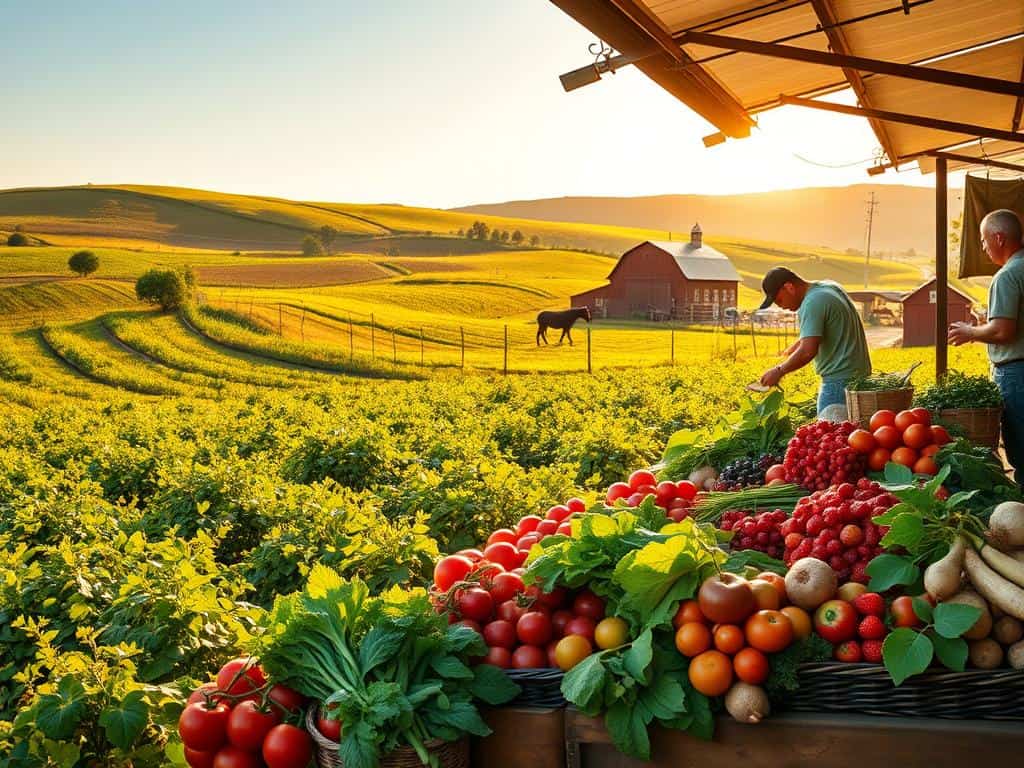
The Rise of Local Farmers’ Markets
Local farmers’ markets are booming. In the last 20 years, their numbers have quadrupled in the U.S. This shows how much people love local food.
These markets are more than just places to buy food. They are community spaces that bring farmers and buyers together. This direct connection helps small farmers and supports the local economy.
By shopping at farmers’ markets, people get fresher food. They also help their local community. This makes local food systems strong and important in our lives.
Conclusion
The farm-to-table movement is more than just a food trend. It’s a lasting legacy that changes how we see food and our community. It focuses on local food, seasonal eating, and eco-friendly practices. This approach boosts our health and has a big impact on our community.
It helps local economies, cuts down on pollution, and builds trust in our food. I see how it supports local farmers and gives us fresh, diverse meals. This movement lets farmers keep more of their earnings and gives us access to the best, freshest food.
Even with challenges like seasonal changes and supply chain issues, new ideas like Tinkoko’s virtual market help. They connect farmers directly with us, helping farms succeed.
The farm-to-table movement is about creating a sustainable food system. It shows that our food choices matter a lot. With technology and more awareness, I think this movement will keep shaping our food culture for years to come.