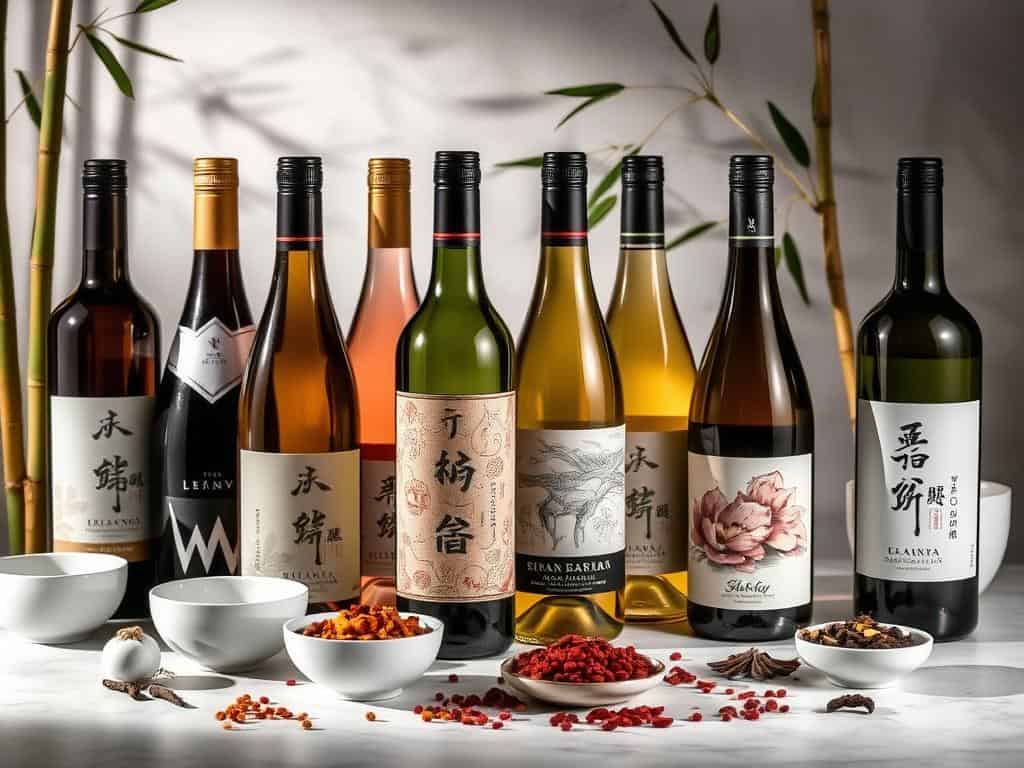
Did you know the global wine market is set to hit over $400 billion by 2027? This is huge for those who love food and drink. It shows how our tastes are changing, with a big focus on wine and Asian food. Asian dishes are full of flavors, textures, and smells, making wine pairing a fun yet tricky task.
Traditional wine pairing rules don’t always work with Asian food’s bold tastes. This includes sweet and sour flavors, soy sauce, and spicy dishes.
In this wine pairing guide, I’ll guide you through matching Asian dishes with the perfect wines. By understanding Asian cuisine’s complexity, you’ll learn to pick wines that make every meal better. Whether it’s spicy Thai noodles or Chinese barbecue, the right wine can transform your dining experience.
Key Takeaways
- The global wine market is projected to exceed $400 billion by 2027.
- High acidity wines like Sauvignon Blanc enhance the flavors in Asian cuisine.
- Aromatic wines, such as Rieslings, pair beautifully with herby Asian dishes.
- Low-tannin reds, like Gamay, complement barbecued Asian foods excellently.
- Oaky Chardonnays should generally be avoided with bold Asian flavors.
- Rosé wines are standout choices, specially with spicy Asian meals.
Understanding the Complexity of Asian Flavors
Asian cuisine is a world of flavors, changing with each region and culture. The main ingredients are key to these unique tastes. Each part of a dish adds its own touch, making wine pairing a fun challenge.
Main Ingredients and Their Impact on Wine Pairing
Ingredients like soy sauce, ginger, and hoisin sauce add depth and sweetness. This affects what wine goes best with a dish. For example, spicy dishes need wines that can stand up to their heat.
Wines with high acidity, like Sauvignon Blanc, cool down the palate. A great match is Thailand’s Monsoon Valley Blended Rosé 2014 with tod man pla. The wine’s fruitiness makes the fishcake taste even better.
Key Flavor Profiles in Asian Cooking
Knowing the flavors in Asian cooking helps pick the right wine. Aromatic dishes like pad thai pair well with wines like Riesling and Torrontés. These wines add a zesty touch without overpowering the food.
Dry Rieslings are great for balancing spicy dishes. Lighter wines, such as Pinot Noir and crisp whites, work well with many dishes.
Wine for Asian Food: The Ideal Pairings
Choosing the right wine can make your Asian food meal even better. The perfect wine can bring out the flavors and balance the bold dishes. High acidity wines and low-tannin reds are great for pairing with your favorite Asian dishes.
High Acidity Wines as Essential Companions
Sauvignon Blanc is perfect for bold Asian flavors because of its crispness. It’s great with spicy dishes, cooling down the heat. Sparkling wines from different places are also good for spicy meals, adding fun to the taste.
Rieslings from Germany, Austria, and Australia add aromatic qualities that match Asian flavors well. For something even more aromatic, try Torrontés from Argentina with fragrant dishes. It makes the flavors even more delicious.
Low-Tannin Reds That Harmonize with Barbequed Dishes
Low-tannin reds like Gamay from Beaujolais and Spanish Garnacha are perfect for barbequed dishes. They have juicy flavors that go well with sweet and smoky tastes. Serving them slightly chilled makes them even better.
Pinot Noir is a bold choice that balances sweet sauces without overpowering the dish. Refreshing Rosés, whether they’re regular or sparkling, can handle the strong flavors of Asian food. They keep the meal light and enjoyable.
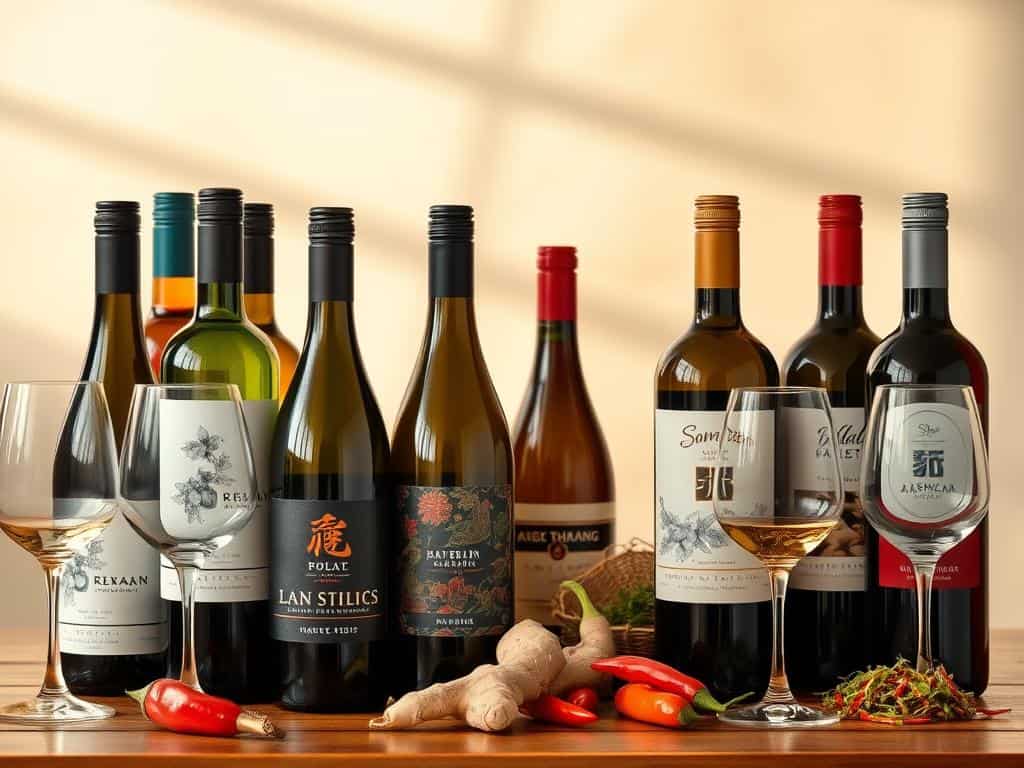
Common Mistakes to Avoid When Pairing Wine and Asian Cuisine
Pairing wine with Asian cuisine can be exciting, but many make common mistakes. I’ll explain why oaky Chardonnays don’t mix well with bold flavors. I’ll also clear up myths about tannic reds and Asian dishes.
Why Oaky Chardonnays Clash with Bold Flavors
Oaky Chardonnays can overpower the taste of many Asian dishes. Their rich, buttery notes clash with the spices and herbs found in Asian cuisine. This can make the taste experience overwhelming.
Instead, try zesty Gewürztraminer or light Riesling. These wines enhance flavors without overpowering them.
Misconceptions About Tannic Reds and Asian Dishes
Many think tannic reds like Cabernet Sauvignon or Merlot pair well with Asian foods. But, their high tannin content can be bitter, ruining the taste. These wines don’t go well with soy sauce, rice vinegar, or hot spices.
It’s better to choose low-tannin wines for a better match. Sweet wines like off-dry Riesling can also help balance the heat, making the taste experience smoother.
Conclusion
As I conclude this wine pairing guide, I reflect on the exciting mix of Asian cuisine and wine. It’s key to pick the right wine for dishes like sushi and spicy Thai curries. The right choice can make or break your meal, so I suggest looking for dry, simple, light wines.
Muscadet is a great pick for its fresh taste and crisp feel. It pairs well with sushi, making it a top choice.
I found a standout wine, the 2021 Oroya “Created for Sushi” by Yoko Sato. It shows the Japanese way of pairing wine with food. Its light and refreshing qualities match Asian cuisine perfectly, making each bite better.
Choosing the right wine can turn a simple meal into a special event. I’m excited to join a wine club that offers wines made to go with Asian dishes. This journey invites you to try new flavors and enjoy the art of wine pairing.