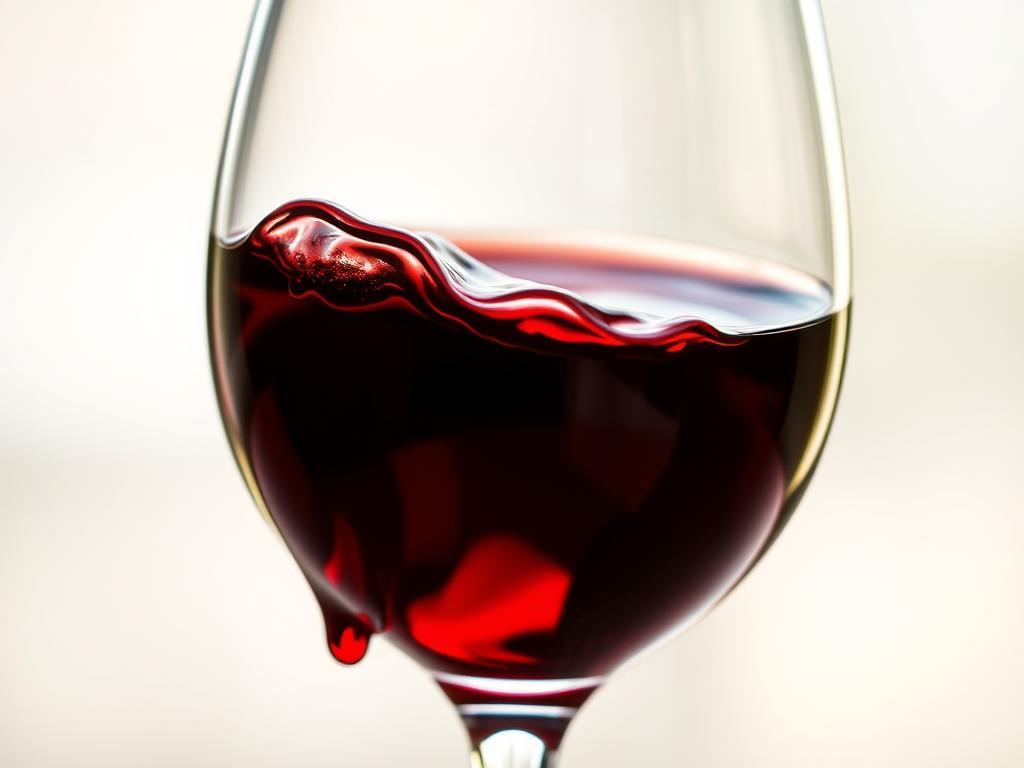
Did you know wine legs are more than just a pretty sight? They are a scientific wonder. These “tears” in your glass are from the Marangoni effect. It’s a complex process involving the surface tensions of alcohol and water in wine.
Many think wine legs show a wine’s quality. But they actually tell us about the wine’s alcohol and how thick it is. In this article, I’ll explain wine legs better. I’ll show you how to make smart wine observations.
Key Takeaways
- Wine legs are the result of the Marangoni effect, involving liquid movement due to surface tension differences.
- Legs form when alcohol evaporates, creating a surface tension gradient in the wine.
- Higher alcohol content in a wine often leads to more pronounced legs.
- The phenomenon is sometimes known as “church windows” or “wine curtains.”
- Wine legs do not indicate quality but provide insights into alcohol content.
- Cooling or diluting wine can diminish the appearance of legs.
Understanding Wine Legs: The Basics
Exploring the world of wine legs gives us insights into wine’s characteristics and the science behind them. When I swirl a glass, the droplets that form along the sides are fascinating. They offer a glimpse into the wine’s complex composition.
Definition of Wine Legs
The definition of wine legs is the visual effect when wine coats the glass and forms droplets after swirling. This is often called “wine tears” or “tears of wine.” Watching these droplets, I see how they relate to the wine’s alcohol content and texture.
Other Names for Wine Legs
Exploring further, I learn that wine legs are also known as “church windows.” This name highlights the visual effect of the legs as they flow down the glass. Knowing these other names for wine legs adds to my appreciation for this phenomenon.
The Science Behind the “Tears” of Wine
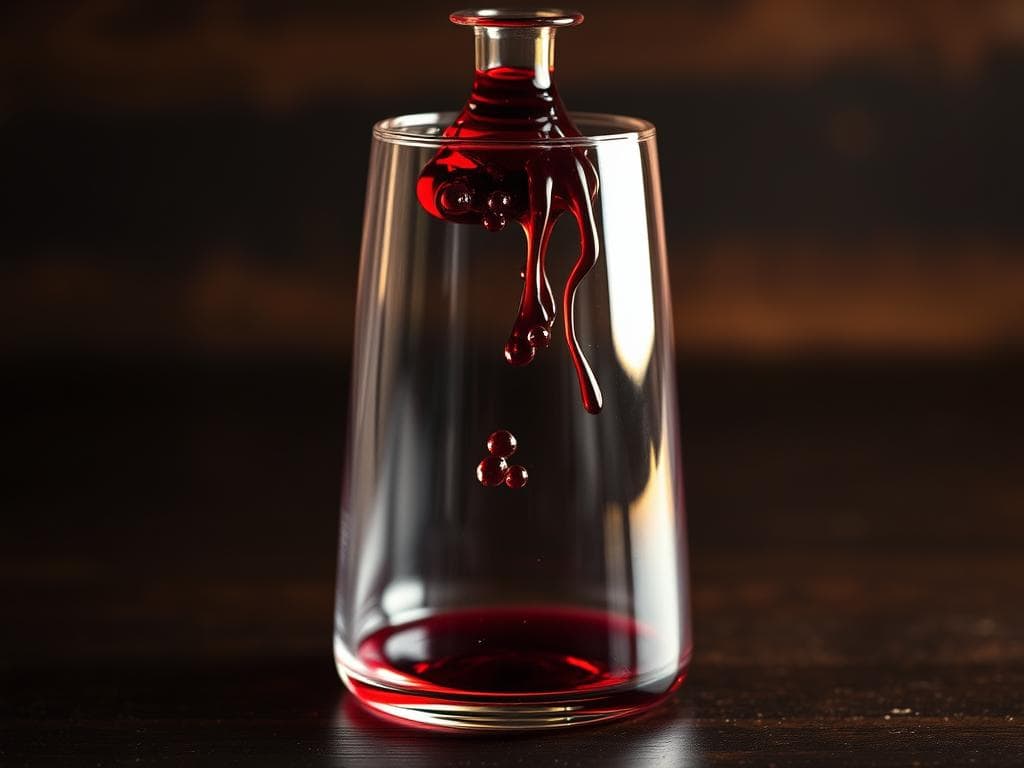
The science of wine legs ties to evaporation and fluid dynamics. The formation is due to the Gibbs-Marangoni Effect, where surface tension changes as alcohol evaporates. This shows how evaporation shapes what we see in the glass.
Wine Legs as Indicators: What Can They Reveal?
When I look at the legs of a wine, they tell me a lot. The way these legs form shows the wine’s alcohol content and how thick it is. This helps me understand the wine’s sweetness and strength.
Alcohol Content
Wines with more alcohol have bigger, slower-moving legs. This is because the alcohol makes the droplets thicker. They take longer to evaporate, creating more liquid on the glass.
This means wines with bigger legs have more alcohol. It’s a simple way to guess the wine’s alcohol level.
Viscosity and Sweetness
The thickness of a wine affects its legs too. Sweeter wines are thicker and have slower-moving legs. This is because they have more sugar.
Drier wines have thinner legs that move faster. This shows they have less sugar and are less thick. The science behind this is the Gibbs-Marangoni Effect. It explains how alcohol and water evaporation creates the legs.
How to Assess Wine Legs
Learning to assess wine legs is key for a full wine experience. It gives insights into a wine’s structure and quality. This method adds depth to my wine tasting, letting me explore each bottle more.
Step-by-Step: Observing Wine Legs
To start, I hold the glass at an angle to let the wine flow up one side. Then, I level the glass to watch the wine flow back down. I note the droplets’ density and how they move.
This tells me about the wine’s alcohol and thickness. The number of legs shows the alcohol strength. The speed of descent hints at the wine’s sweetness.
Tips for Swirling Wine
Swirling wine does more than look good. It helps alcohol evaporate, making the aroma better. I swirl gently to avoid splashes and let the aromas develop.
Factors like temperature and humidity affect evaporation. Knowing this helps me enjoy and trust my wine tasting more.
Blind Tasting Techniques
Blind tasting has made me better at assessing wines. Tasting without seeing the label makes me focus on the wine’s qualities. This helps me understand the wine’s body and sweetness better.
It also shows me how wine legs relate to quality. This method has greatly improved my wine knowledge.
Conclusion
Wine legs give us a peek into the science behind enjoying wine. They show us the alcohol content and how thick the wine is. This is mainly because of the Gibbs Marangoni effect, where alcohol evaporation changes the surface tension.
My research shows that more legs often mean higher alcohol and thicker wine. But, they don’t tell us much about the wine’s quality or taste.
Learning about wine legs can make me appreciate wine more. It helps me notice things like the wine’s body and sweetness. But, it doesn’t take away from the wine’s aromas, where it’s from, or the story behind it.
Wine legs can be seen in many wines, from top-notch to more everyday ones. This knowledge helps me enjoy wine tasting more fully.
While science about wine legs is interesting, the real joy is in tasting and sharing wine. Whether it’s a special vintage or a simple glass with friends, the fun and personal touch makes it all worth it.