Did you know almost 90% of the world’s top wines are aged in oak barrels? This fact shows how important wine barrels are in creating wine’s taste and character. Oak barrels add flavors like vanilla and smoke, while stainless steel keeps the wine’s natural taste.
Let’s look into the history and effects of both methods. Which one is better for different wines? Join me as we see how these aging methods change wine’s taste, texture, and quality.

Key Takeaways
- Oak barrels add complex flavors like vanilla and spice.
- Stainless steel tanks preserve natural fruit characteristics in wines.
- Cost-effectiveness favors stainless steel’s durability.
- Oak contributes to depth and texture in full-bodied reds.
- Stainless steel allows precise control during fermentation.
- Combining both methods can provide the best of both worlds.
Understanding Wine Barrels: The Impact on Flavor and Aging
The journey of wine aging is filled with ancient wisdom and modern science. Wine was first stored in clay vessels around 6,000 BC. The Romans then used oak barrels, starting a new era in wine aging.
Oak barrels brought a new level of complexity to wine. They allowed for a deeper mix of flavors and textures. This change was a big step in the history of wine barrels, showing their importance.
History of Wine Aging Techniques
Winemakers have tried many ways to age wine over the years. Oak barrels were a game-changer, improving wine quality. Exploring the history of wine barrels shows how different cultures have shaped aging traditions.
The type of wood, the toast level, and where the wood comes from all matter. Winemakers see the barrel’s power to turn simple wines into complex, elegant ones.
Barrel Influence on Wine Characteristics
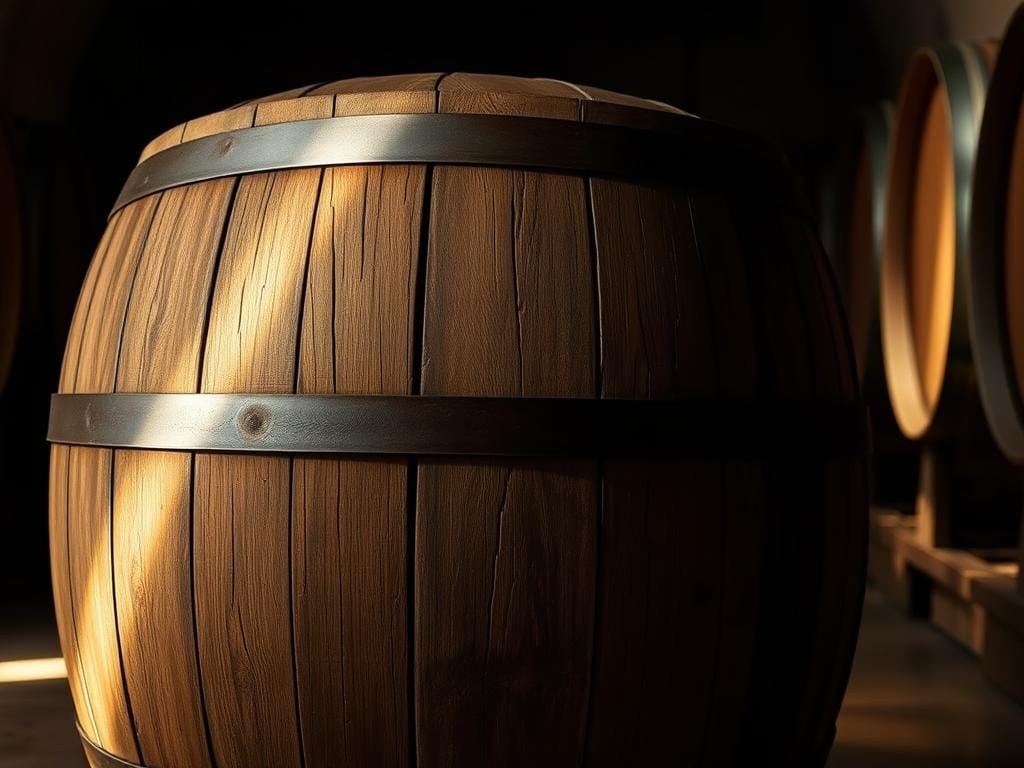
Oak barrels add flavors like vanilla, clove, and smoke to wine. They also soften tannins, making the wine smoother. Different types of oak, like European and American, give wines unique tastes.
European oak is denser, good for lighter wines. American oak is richer, better for full-bodied wines like Cabernet Sauvignon. The region where the oak is from also adds to the wine’s flavor. Knowing these details helps me enjoy wine even more.
Comparing Oak Barrels and Stainless Steel
Exploring wine production means understanding oak barrels and stainless steel aging. Each method has its own benefits that can greatly affect the wine’s taste. Let’s look at what oak barrels offer, the perks of stainless steel, and the costs for winemakers.
Advantages of Oak Barrels
Oak barrels have a long history, starting with the Romans. They found that these barrels improved wine’s taste and aging. Aging in oak barrels changes the wine’s smell and taste.
This method makes the wine’s tannins stronger and keeps its color bright. It also brings out new aromas like vanilla and clove. These flavors are common in wines like Chardonnay.
Benefits of Stainless Steel Aging
Stainless steel aging has its own advantages. It keeps the wine fresh and its acidity sharp. This method doesn’t add any unwanted flavors.
Stainless steel also lets winemakers control the temperature during fermentation. This is key for wines that show off their fruitiness. Many winemakers choose this for its reliability and ability to keep the wine’s true taste.
Cost Considerations for Winemakers
The cost of winemaking is a big factor in choosing between oak barrels and stainless steel. Oak barrels are expensive to buy, store, and maintain. Stainless steel, on the other hand, is cheaper in the long run.
The choice between these aging methods depends on what the winemaker wants and can afford. It’s a balance between personal taste and budget.
Conclusion
Wine aging is a complex topic, with oak barrels and stainless steel each having their own benefits. The debate between oak and stainless steel is ongoing. Oak barrels add flavors like vanilla and coconut, while stainless steel keeps the wine’s taste pure.
The choice between oak and stainless steel depends on what you like in your wine. Oak makes the wine more complex, while stainless steel keeps it clean and straightforward.
There are also different types of oak, like American, French, Hungarian, and Slavonian. Each type brings its own flavors to the wine. This affects the wine’s smell, feel, and taste.
Knowing how different barrels change wine helps me pick the perfect bottle. Whether I want something rich or light, I can find it.
Winemakers are always trying new things with wine aging. Understanding oak and stainless steel helps us enjoy our wine more. It shows that the perfect wine is a mix of taste and skill.