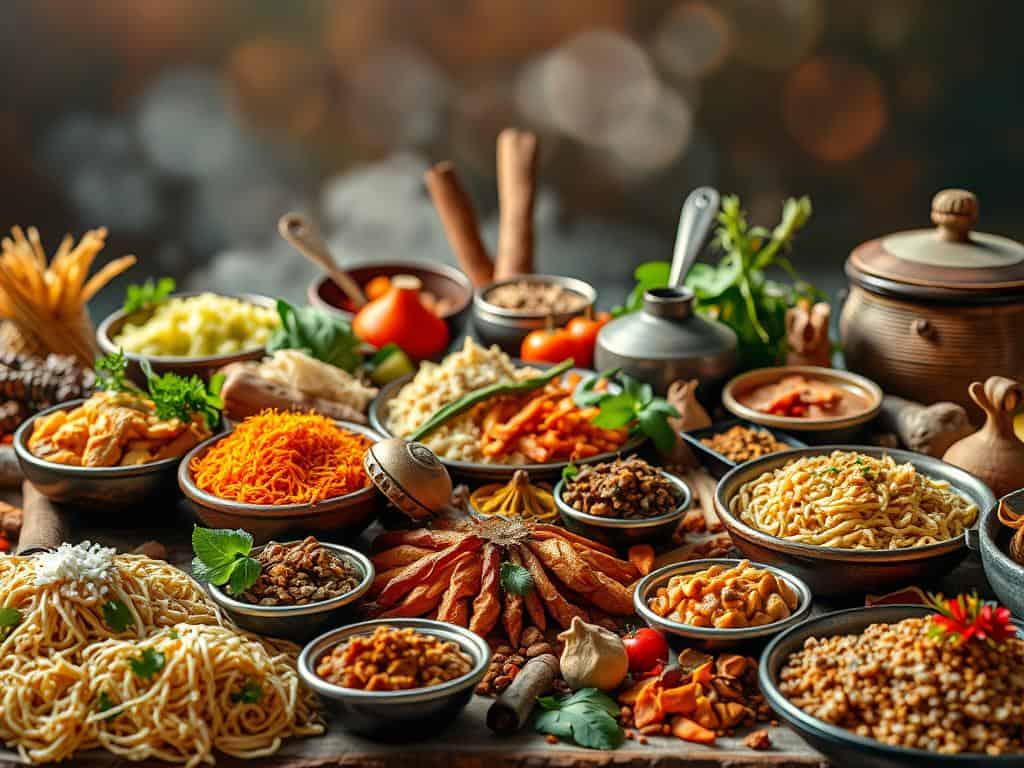
Did you know food is key to our cultural identity? It shapes what we eat and how we bond with others. Food lets us share rituals and celebrate our culture. Growing up in the U.S., my meals showed my heritage’s rich stories and traditions.
For instance, online debates like #jollofgate show food’s deep symbolism. Exploring dishes like Mexican mole or Thai street food, I found each meal tells a story. These stories reveal the cultural importance we give to food.
Food is more than just food; it shows social and gender roles in a culture. Shirley Ting’s grandmother’s Egg Foo Young recipe is a perfect example. It mixes migration history with cultural identity. Sharing meals creates lasting memories, breaking cultural barriers and deepening our appreciation for our culinary traditions.
Key Takeaways
- Food serves as a medium for socializing and celebrating cultural practices.
- Dishes like mole and ramen reflect historical interactions and cultural exchange.
- Food traditions help preserve cultural values and foster a sense of belonging.
- The communal aspect of meals creates a powerful connection between people.
- Food often symbolizes social hierarchies and gender roles within societies.
- Sharing meals offers a glimpse into the traditions that shape our collective identities.
The Role of Food in Cultural Identity
Food is a key part of our cultural identity, linking us to our past and traditions. Every meal not only fills our bellies but also shares the values and stories of those who cook it. By exploring the ingredients and cooking methods, we learn about the land and history behind each dish.
Food as a Reflection of History and Tradition
Ingredients like soybean in East Asia, olive in the Mediterranean, and maize in the Americas show the unique cultures of these places. The story of lobster going from a cheap food to a luxury item in the USA shows how tastes and status can change. Eating habits, like using the right hand in India or finishing all food in Japan, also tell us about cultural values and traditions passed down through generations.
Community and Connection Through Cuisine
Sharing meals brings people together, creating strong bonds across different backgrounds. For example, when an Indian grandmother teaches her grandson traditional recipes, it keeps their culture alive. Fusion foods, like Nikkei, mix Japanese and Peruvian flavors, showing how migration influences our food and identity. Places like Caribbean diners are community centers where new arrivals can connect with their roots and adapt to new cultures. Food is a common language that helps us understand and connect with each other, no matter where we come from.
Food Symbolism and Its Cultural Significance
Exploring food symbolism shows how food and culture are deeply connected. Each dish tells a story, showing what a society values. For example, jiaozi dumplings symbolize wealth because they look like ancient Chinese gold.
This shows how food can carry deep meanings, linking to cultural identity.
The Meaning Behind Traditional Dishes
Traditional dishes carry deep meanings and tell stories of history. Zongzi, for instance, honors a famous poet, connecting past and present. Nian gao, eaten during New Year, wishes for success and betterment.
Steamed fish, served whole, means completeness and prosperity. Its name sounds like “surplus,” adding to its significance.
Culinary Practices as Expressions of Values
Cooking is more than just making food; it’s about family, culture, and values. Noodles, for example, symbolize long life and hope. Moon cakes during the Mid-Autumn Festival celebrate family and unity.
Even simple foods like oranges and tangerines have deep meanings. Oranges bring wealth, while tangerines bring good fortune. This shows how food is full of meaning in our lives.
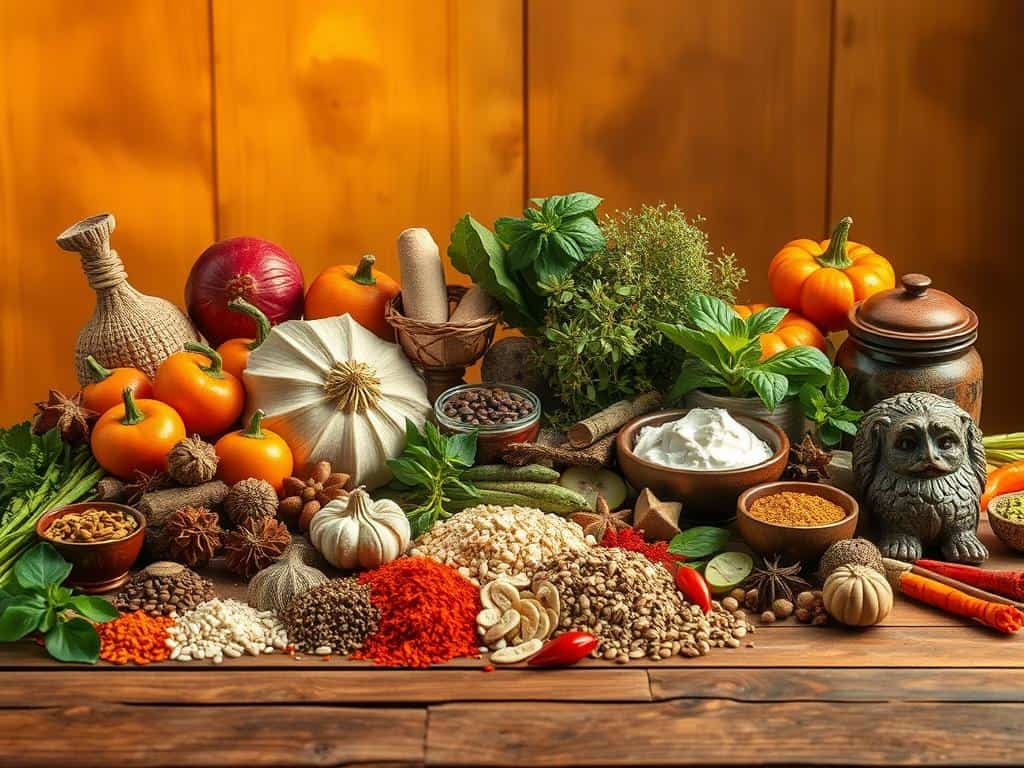
Food symbolism is rich and varied, crossing cultures and time. Haggis at Burns Night shows Scottish pride, while Easter foods symbolize rebirth. Today, food can show social class and identity.
Looking into these meanings helps us understand our shared values and traditions. It shows how food brings us together.
Conclusion
Thinking about food culture shows us how much our meals mean. They tell stories of migration and blending of cultures. For example, Indian restaurants in Britain and the dabba in Mumbai show this.
These traditions connect us with different identities. They also show how our views on food change over time. This is a global conversation that shapes what we eat.
Culinary creolization shows how food mixes and makes our lives richer. In Mumbai, old and new ways of eating meet. Young people mix these, showing their diverse selves.
This mix of traditions and new ideas is powerful. It brings families together and keeps cultural stories alive. Food is a key part of our daily lives.
Understanding food culture helps us connect and respect each other. It’s not just about eating. It’s about exploring the world through taste.
By valuing our food stories, we make food culture even more vibrant. This way, the tales in our meals will live on for many years.