Did you know that wine color can tell you about its age and quality? For example, white wines get a golden color as they age. Red wines change from deep purple to a rich brick red. Learning these details is just the start of a fascinating journey into wine tasting.
In this article, I’ll share wine tasting tips and techniques for beginners and experts. By mastering the five basic steps of wine tasting, you’ll discover its subtleties. This will help you enjoy wine like a professional sommelier. So, let’s start this tasty adventure together!
Key Takeaways
- The color of wine indicates its maturity and quality.
- Swirling wine enhances aromatics and texture.
- Smelling wine is essential in assessing its characteristics.
- Perfecting each step—seeing, swirling, sniffing, sipping, and savoring—elevates the tasting experience.
- Documenting your impressions helps refine your palate over time.
- Stay hydrated and avoid strong scents before a tasting session.
Understanding the Basics of Wine Tasting
Wine tasting is a mix of art and science. It lets people enjoy and understand wine’s complex flavors. Learning the wine tasting basics is key to enjoying this skill. Knowing the steps of wine tasting helps you explore different wines. Avoiding common mistakes makes the experience even better.
What is Wine Tasting?
Wine tasting is about checking a wine’s look, smell, taste, and finish. Each part tells you about the wine’s quality, where it’s from, and how it was made. By learning about things like acidity and tannins, you can see what makes each wine special.
The Five Basic Steps of Wine Tasting
Following these five steps ensures a full wine tasting experience:
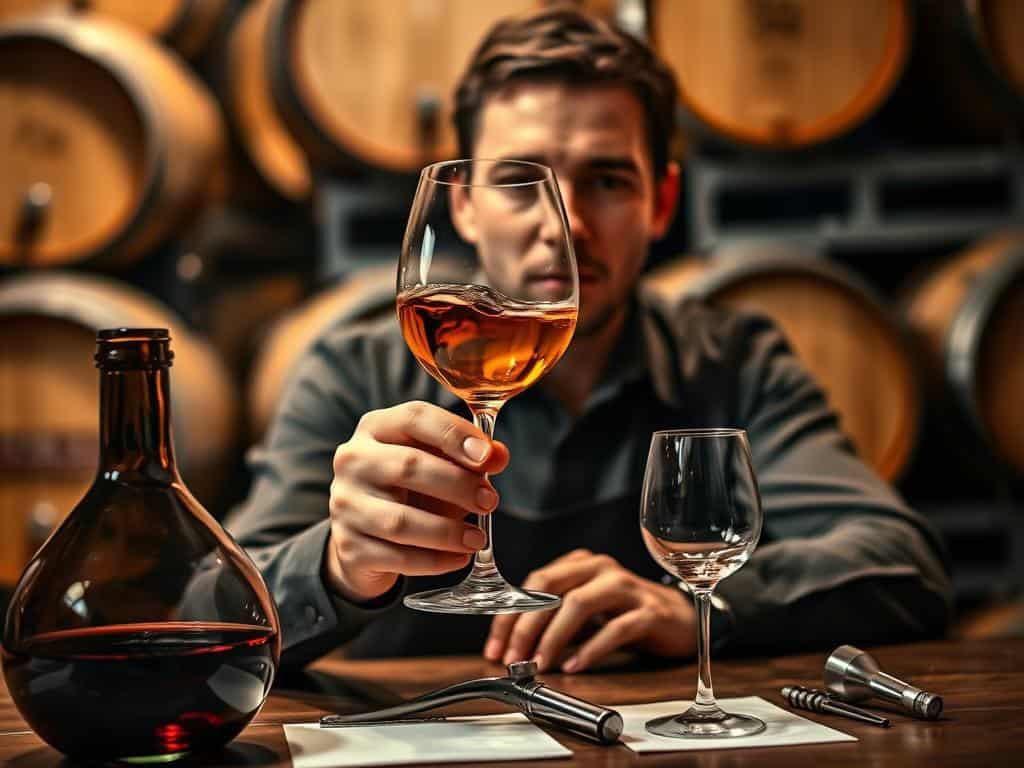
Sight: Start by looking at the wine’s color and clarity. This tells you about the wine’s age and body. For example, a young red wine might be purple, while an older one is more ruby-brick. Swirl: Swirl the wine to release its aromas and see the legs, which show its viscosity and alcohol level. Smell: Smell the wine before and after swirling. This lets you notice different scents, like fruit or earth. Taste: Taste the wine and feel its sweetness, acidity, tannins, and body. Each sip brings out different flavors, like citrus or blackberry. Savor: Think about the wine’s finish. It shows the wine’s balance and complexity, making you appreciate it more.
By following these steps, you can avoid common mistakes. These mistakes include rushing or missing small details. Focusing on these basics improves your tasting skills and deepens your love for wine.
Wine Tasting Tips for Beginners
Starting to learn about wine tasting can feel overwhelming. But, using simple tips can make it more enjoyable. The five S’s of wine tasting—Sight, Swirl, Smell, Taste, and Savor—are key. They help me understand the different flavors in each wine.
Practice the Five S’s
First, I look at the wine’s color and clarity. This tells me about its age and quality. Swirling the wine lets out its smells, showing its richness and alcohol level.
Then, I smell the wine to find fruit, floral, or earthy scents. This adds depth to my tasting. Next, I taste the wine to see its sweetness, acidity, and tannins. This lets me discover its unique flavors.
Lastly, I think about the wine’s balance and finish. This completes my tasting journey.
Aroma Wheel Utilization
An aroma wheel is a great tool for wine tasting. It helps me identify different smells. Beginners should get to know it to better enjoy wine.
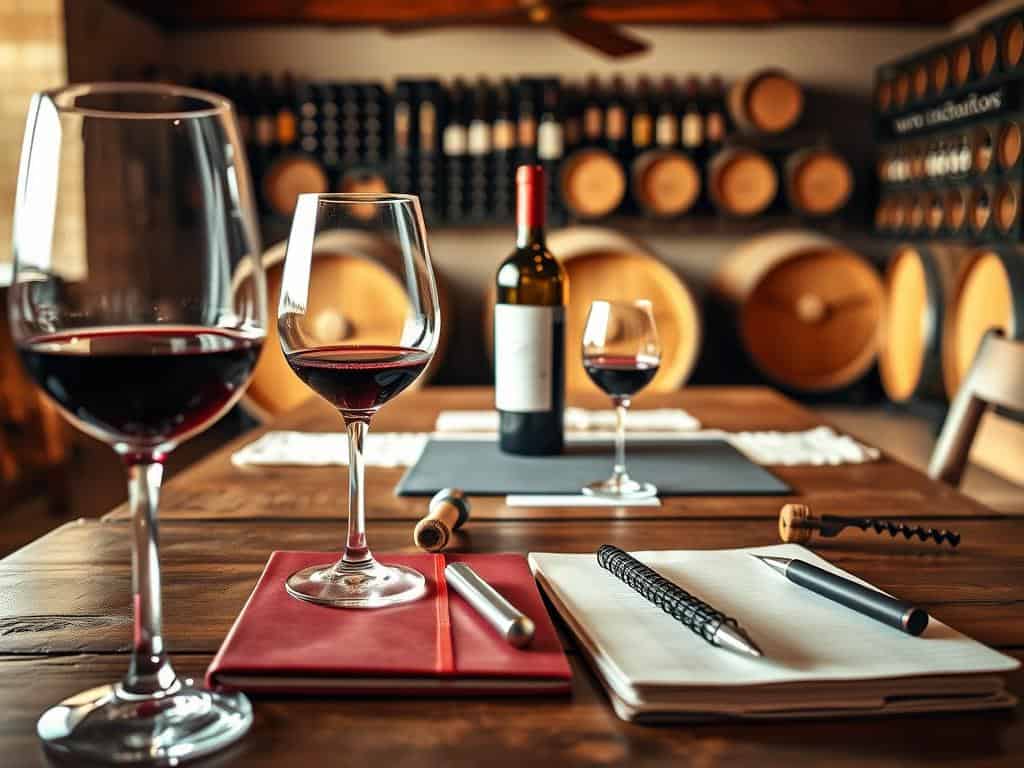
Writing down my thoughts and using wine tasting terms helps me learn. Keeping a tasting journal tracks my preferences. This makes future tastings even more fun.
Conclusion
Reflecting on my wine tasting journey, I see it’s more than just drinking. Each tasting lets me discover new flavors and smells. Using tools like ISO glasses and aroma kits has made a big difference.
These tools have helped me improve my sense of smell. They also let me understand wine’s complex qualities better.
Learning to taste wine takes time and practice. Following the WSET’s systematic approach and using mnemonics like BIFC has made me better. This practice sharpens my skills and deepens my connection with wine.
Creating the right environment is also key. Avoiding strong smells and choosing well-lit places improves my experience.
Enhancing wine appreciation is a journey of discovery and patience. By trying different wines and judging their value, I keep improving my taste. Wine tasting becomes a fun and rewarding adventure to share with others.